Monday, May 25, 2020

Garden of Love (2003)


AKA The Haunting of Rebecca Verlaine and Born Undead 

Although he'll likely never be given credit for it by detractors who see him as nothing more than a schlocky goremiester, Olaf Ittenbach is far from a one-note filmmaker. As one of the forefathers of German splatter, of course Ittenbach is going to be best known for his incredible special effects work and the man himself has even stated in interviews that his main purpose with his films is to entertain. Nevertheless, it's clear to anyone actually paying attention to his films that Ittenbach has more on his mind than just gore. One key thread that runs throughout a good chunk of Ittenbach's filmography is the concept of family, and especially families in conflict, going all the way back to Ittenbach's first feature Black Past (1989) where Ittenbach himself played an angsty teenager constantly at odds with his father and sisters. The Burning Moon (1992) also saw Ittenbach play the role of a mad at the world, junkie teen who comes to physical blows with his family. Ittenbach later took the family concept into grotesque comedic territory with Family Saga (2006), or Familienradgeber and its sequel Familienradgeber 2 (2009). Familial ties also play significant roles in the narratives of Chain Reaction (2006), Dard Divorce (2007) and No Reason (2010). One of Ittenbach's best films, 2003's Garden of Love saw Ittenbach put a supernatural spin on the theme along with a few other surprises.

In 1990, the inhabitants of the Verlaine compound, a commune of hippies led by rock star Gabriel Verlaine were brutally murdered by a masked madman, the lone survivor being Gabriel's young daughter Rebecca who slipped into a coma and was subsequently raised by her aunt and uncle with no memory of the murders. Years later, Rebecca (Natacza Boon), a well-adjusted student begins receiving strange messages from horribly disfigured ghostly figures who reveal themselves to be her father and the victims of the massacre, urging Rebecca to seek out those responsible for the killings, luring victims to the vengeful spirits at the compound, uncovering the truth about her past and the murders in the process.

Despite the rather bland re-titling the film “The Haunting of Rebecca Verlaine” for its DVD release, Garden of Love, named for a Gabriel Verlaine song in the film, is far from being a bland haunting film. The film may be a ghost story first and foremost, but in a wonderful display of cross-subgenre pollination, Ittenbach also delivers a revenge film from the vantage point of the ghosts, but what's at the heart of the film is the character study of Rebecca. Easily sympathetic, Ittenbach puts in extra effort to develop her character throughout, making the various narrative twists all the more potent. The twists are quite nasty and giallo-esque, which take the film into the realms of a “drive-the-woman-crazy” type of film such as Umberto Lenzi's Orgasmo/Paranoia (1969). And the film is, of course, a splatter film, through many will be surprised by the fact that the film really only contains three major gore set-pieces, the main highlight being the slaughter of an entire SWAT team by the hands of the ghosts, one of the most memorable scenes in all of Ittenbach's oeuvre. The effects work is, as always with Ittenbach, outstanding and innovative. The ghosts themselves look fantastic and Cenobite-esque with Ittenbach channeling his love of Hellraiser (1987) during their appearances which are all incredibly stylish and give moments of the film a thick atmosphere, Ittenbach also managing to avoid cheap jump-scare tactics. Ittenbach's warped sense of humor is also featured in a hilarious infomerical parody featuring the ghost of Rebecca's father.
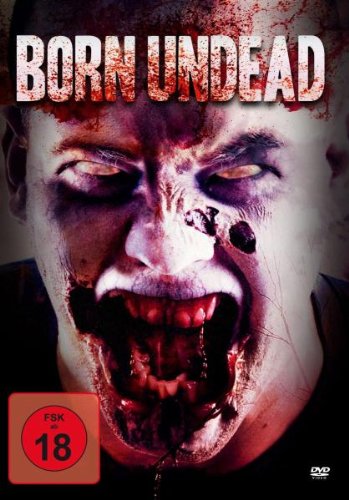
All of the emotional weight of the film rests on the shoulders of lead actress Natacza Boon who, along with having an interesting Shelley Duvall-esque look to her, is also a more than capable actress who's performance really elevates the material. Garden of Love was Boon's second film with Ittenbach, having previously featured in the second segment of Ittenbach's anthology Beyond the Limits (2003) where her character also gave the story a bit of heart. While being interviewed for the Beyond the Limits DVD, Ittenbach praised Boon saying “I think with Natacza I had the most fun on the set, you know. She's totally funny, she's totally crazy and she's absolutely cool.” Strange since they had such a strong rapport that they only did two films together. Unlike so many Ittenbach titles, who still face draconian censorship for their home video releases, particularly in Ittenbach's homeland of Germany, Garden of Love also his the distinction of having an easily available uncut DVD release, albeit under the anonymous sounding re-title “The Haunting of Rebecca Verlaine”. The film was also released under the wildly misleading title of “Born Undead” with equally misleading cover art. Titles aside, Garden of Love is a gem of a post-2000 horror movie with Ittenbach not only finding new and clever ways to splash the screen with blood, but crafting an intriguing storyline to go along with his trademark splatter effects.


Monday, May 11, 2020

Beyond the Limits (2003)


Anthology films have long been a way for directors to have fun within a shorter format and also serve as a nice way for younger filmmakers to further hone their craft. Always fertile in the horror genre, the anthology format has become especially popular in recent years with the stories contained within the films often centering around a common thread. While the multi-director anthology films always present interesting concepts, what's just as interesting and can sometimes be even moreso is how a single director approaches an anthology film. Some of the obvious examples include Mario Bava's Black Sabbath (1963), Freddie Francis' Tales from the Crypt (1972), Dan Curtis' Trilogy of Terror (1975) and of course George Romero's Creepshow (1982). Walerian Borowczyk also proved himself to be adept at anthologies firstly with Immoral Tales (1974) and later with Immoral Women (1979). Borowczyk would also feature in another erotic anthology, Private Collection (1979) alongside Shūji Terayama and Just Jaeckin. Another director who proved to handle the anthology concept quite well is German splatter heavyweight Olaf Ittenbach, who's second feature, the infamous shot-on-video anthology The Burning Moon (1992) became an immediate underground favorite and solidified Ittenbach's reputation among fans of extreme gore effects. Ittenbach would return to the format in 2003 with Beyond the Limits, one of the most ambitious works in the realm of German splatter and certainty one of the bloodiest anthology offerings around.

Vivian, a young journalist seeks out Frederick, the caretaker of a centuries old cemetery for an interview. Frederick agrees and begins to tell her two stories about his “customers”, as he reefers to them as, the main thread tying both tales together being an ancient relic known as the “eternal heart”, a human heart said to grant immortality to whomever possesses it. The first, a contemporary story involving double-crossing gangsters, a coke deal gone bad and a dinner party interrupted by two sadistic hitmen while the second story goes back to the middle ages and the origin of the heart, centering on David Deming, a renegade inquisitor obsessed with obtaining the heart and James Flynn, a true believer desperate to stop Deming.

Beyond the Limits couldn't have been a more appropriate title. As is often the case with Ittenbach, the film could be labeled as “extreme”, though not just in the violence and gore departments, which are pretty extraordinary. Virtually everything in the film is heightened, from the exaggerated performances, the gangster story becoming downright histrionic at times, the acidic dialogue spouted in both segments and flashy camerawork, with Ittenbach really flexing his directorial muscles throughout the film. Yet that's precisely how a film such as Beyond the Limits needs to operate. As an actual anthology film, the film works thanks not only to the concept of the “eternal heart”, which is a unique idea in and of itself, but the clever twist Ittenbach tosses in at the end tying both stories together with the interview wrap-around. Both stories would have worked equally with or without the wrap-around segments and both have more to offer than just focusing on the heart. The gangster segment in particular has a pretty involving side plot involving revenge and the modern setting gives the violence an especially vicious kick. The medieval story plays out like a more classical tale and like the first also features several interesting asides, including a love story that amazingly works within the context of the segment and doesn't feel out of place. The segment also features a bit of sword-fighting action and Ittenbach sneaks in some of his morbid humor amidst the excessive bloodshed splashed throughout the segment, Ittenbach's effects work astonishing as always.

Beyond the Limits was co-written by Ittenbach and Thomas Reitmair, who was Ittenbach's right hand man in a number of departments for many years going all the way back to Ittenbach's debut feature Black Past (1989). It was the second screenplay Reitmair collaborated with Ittenbach on following Riverplay (2001) and the two would also co-write Garden of Love (2003) and Chain Reaction (2006). Reitmair has also appeared on screen in several of Ittenbach's films, most notably in Beyond the Limits as one if the hitmen in the first story but Reitmair also features in Premutos: The Fallen Angel (1997), Riverplay, Garden of Love, Chain Reaction, Dard Divorce (2007), No Reason (2010) and Legend of Hell (2012). Reitmair has also written music for Black Past, Premutos, Riverplay, Garden of Love and Chain Reaction as well as serving as Ittenbach's assistant director on Riverplay, Legion of the Dead (2001), Beyond the Limits, Garden of Love and Chain Reaction. Like so many of Ittenbach's films, Beyond the Limits has also fallen victim to draconian censorship laws, resulting many cut DVD releases. By far the best release is the steelbook, which, along with containing the complete film also features a hefty bunch of behind-the-scenes footage showing that even when working with a slightly larger budget and bigger crew, Ittenbach's approach is always hands-on, making Beyond the Limits one of the more quality horror films from the 2000's.


Monday, April 27, 2020

Black Past (1989)


Although unfortunately some of the fanfare tends to come from the cult of irony, the more light shone on shot-on-video movies the better as such works represent an important part in evolution of filmmaking. It's been documented countless times, but the fact remains that not only did the video revolution make it easier for everyone to watch films in their own homes, but the accessibility of video cameras made it easier to make their own films. Of course, given that the majority of SOV movies were amateur productions the quality of the majority of SOV movies can be rather shoddy, yet despite the quality, the one trait all SOV films had was sincerity. That combined with the amateur effect made the movies feel all the more personal and gave the SOV aesthetic an odd mystique. While a good chunk of the biggest SOV titles like Boardinghouse (1982), Sledgehammer (1983), Black Devil Doll from Hell (1984) and Woodchipper Massacre (1988) were American productions, Europe had its own movement, the leader of which was Germany's Olaf Ittenbach. Ittenbach quickly gained notoriety among underground horror fans due to the extreme gore quotient of his films, chief among them the infamous The Burning Moon (1992) and later Premutos: The Fallen Angel (1997) but it was Ittenbach's first feature Black Past that put his name on the map, a crucial title for both splatter horror and SOV films.

After moving into a new house with his father and two nagging sisters, Thommy (Ittenbach), an aimless and angsty teenager discovers a mirror chained up in a box in the attic that belonged to the previous owner of the house who went on a murderous rampage. Thommy hangs the mirror in his room only to discover the sinister forces it houses when his girlfriend Petra walks into oncoming traffic after being put into a daze by the mirror. After reading the diary he found with the mirror, Thommy finds himself under the mirror's spell, transforming him into deadly demonic entity.

A labor of love in every sense of the term with Ittenbach writing, directing, acting, co-producing and doing the effects, Black Past stands head and shoulders above most shot-on-video features in every department. What's more, Ittenbach's previous film work consisted of shorts which he freely admits were excuses for showcases his effects work and like most SOV flicks, Black Past was shot mostly on weekends. Although the cursed house set-up is a familiar one, Ittenbach keeps things fresh and even takes the film into territories that most SOV features would never attempt to go. There is a sincere attempt at drama throughout the entire film revolving around Thommy and his constant feuding with his father and sisters. Despite Thommy's deadbeat nature, Ittenbach himself has a certain charm about him and his family's constant harping on him about everything does make his anger seem a bit more justified. Even the moments that are an obvious attempt at padding out the run time, one of the most common occurrences during SOV movies, like scenes of Thommy wandering aimlessly in stores have an endearing factor to them because of Ittenbach's emphasis on giving the film a semblance of emotion. Obviously due to the format the film does run into some of the technical issues inherent in all video movies, but again Ittenbach manages to minimize them and thanks to his ingenuity even gives moments of the film as genuine sense of style and atmosphere, particularly during the third act when the film becomes a massive bloodbath.

Being an Ittenbach film, the biggest selling point is of course going to be the gore with all the effects created by Ittenbach himself. What may surprise many given Ittenbach's reputation is how he takes his time with it. There are splashes of violence in the opening of the film and sprinkled throughout in the form of hallucination and dream scenes but Ittenbach saves the big showcase for the films previously mentioned third act which consists of one big gore set piece after another. Not only is the gore plentiful (and rather mean spirited with one particularly savage bit involving one of Thommy's sisters) but more importantly, it's innovative with Ittenbach coming up with some pretty astonishing and original ways of filling the screen with as much blood as possible. It's also crucial to point out that the effects were 100% practical which, given the resources Ittenbach was working with, make them all the more admirable. Perhaps the most impressive would be Thommy's transformation into his fully demonic form, though there is a showstopping hallucination/dream that Ittenbach would improve upon with the infamous Hell segment in his follow-up film The Burning Moon, his most well known work. Ittenbach's effects skills would eventually find him work on other films, but it all began with Black Past, a remarkably assured film for a homegrown debut and really an important entry in the German horror canon.


Monday, April 13, 2020

Fresh Meat: A Ghost Story (1995)


The 90's were very much a transitional period for film, American film in particular. By and large, the 90's were the last decade of diversity in terms of budget. While the decade had its share of massive blockbusters, those types of films didn't have the stranglehold they have over the modern film industry, leaving room for middle budget films to breath along with the plethora of films to come out of the 90's indie boom. The adult film industry was also going through something similar throughout the 90's. Although plotless gonzo movies had gobbled up the majority of the market since the video revolution in the 80's, there were still a select few left in the adult world at the dawn of the 90's still intent on producing something out of the ordinary, one of which was John Leslie. The actor turned director had been on a hot streak since 1988, churning out some of the best adult films in early 90's, culminating in his jump from VCA to Evil Angel with his masterpiece Dog Walker (1994). Leslie followed up Dog Walker with a transitional film of his own, Fresh Meat: A Ghost Story, his most bizarre and difficult work and a film that marked the end of an era of consistently fascinating and original narrative based features for Leslie while also signifying the path he would take until his passing in 2010.

Unlike Dog Walker which began on a somewhat traditional note before going into more stranger territory, with Fresh Meat Leslie tosses anything resembling traditional narrative out the window the moment the opening credits end. Leslie does the film somewhat of a narrative set-up around Danny (Joey Silvera) and his wife Julia (Krysti Lynn) along with their “pet” human moving into their new house, where the realtor informs them of a former resident of the house known as “The Butcher” who killed his wife before hanging himself in a meat locker. Anything that happens after is left up to interpretation as the film plays out like a hardcore predecessor to David Lynch's Inland Empire (2006) with Leslie directing Silvera, brilliantly perplexed from beginning to end, into one random scenario and sexual encounter after another, shifting perspectives and making any attempt at possible explanation the more futile as the film goes along. The film also finds itself at the end of the loose trilogy of Leslie films centered around the supernatural with the real estate angle returning from both Mad Love (1989) and Laying the Ghost (1991) while the sitcom style laugh track, lunatic sense of humor and various other eccentricities present in Laying the Ghost return in Fresh Meat, by far the most surreal and inaccessible of the three. Leslie takes the film into even more outlandish territory by breaking the fourth wall and showing the actual shooting of a scene featuring Jamie Gillis as a detective arresting actors who can't remember their lines.

The film also marked a stylistic transition for Leslie too. Leslie had shot the majority of his features on video, though managed to shoot three on 35mm, Chameleons (1992), Anything That Moves (1992) and Dog Walker. Despite the limitations of the medium, Leslie always managed to side-step the shortcomings and delivered some of the most stylish adult features of the time. Fresh Meat greatly differs in that it was lensed on a much more low quality of video giving the film an incredibly raw and personal feel very much like the gonzo movies Leslie would soon devote the rest of his career to and due to the opaque nature of the films plot, the sex scenes do tend to take up even more of an already extended amount of time, though much like Dog Walker, the drawn out nature and hallucinatory feel of the the scenarios begin to emit a hypnotic aura ensuring that anyone watching the film is put in the same dazed and confused headspace as Silvera. There are also several instances of black and white 8mm film spiced into the movie adding to the already rough tone. Leslie does inject many scenes with his unique sense of style though and the films costume design features a big focus on striking leather and PVC wear giving the film one foot in the fetish realm. Leslie does also push the boundaries in the bodily fluids department during an unforgettably odd sequence involving Silvera and his “pet”, a plot point played completely strait.

Either a creative choice or due to the economy of the adult industry of the time (and to this day by and large), following Fresh Meat: A Ghost Story Leslie's output consists of nearly all gonzo work. Ironically, Fresh Meat would go on to become a long running series, lasting a whopping 29 entries, although none are related to A Ghost Story. Leslie would also go on to create the first person Voyeur series which produced 36 entries. Other Leslie gonzo series include the cheekily titled Don't Make Me Beg, Ass Trap, Big Tit Crackers, Gobble the Goop and Crack Her Jack. Worlds removed from the likes of Leslie's earlier titles like The Catwoman (1988), Second Skin (1989), Chameleons and Anything That Movies. Interestingly, Leslie's career trajectory somewhat mirrors that of fellow adult legend José Bénazéraf who took a similar approach later in his career in the 80's. Leslie did direct the visually intriguing Drop Sex (1997) after A Ghost Story and managed to make one last narrative feature Brianna Love: Her Fine Sexy Self  (2007) (where he made a return in front of the camera as well) but Fresh Meat: A Ghost Story marked the end of era for Leslie and to a certain extent the adult industry as a whole with the film being one of the most original and surreal works to come out of the realm of adult film.

Monday, March 30, 2020

Dog Walker (1994)


One of the most legendary companies in adult film, VCA released many a classic throughout the 80's and 90's. From 1988 to 1994, VCA was the home of actor turned director John Leslie, releasing many of his finest directorial efforts. VCA was also the distributor for the films of Stephen Sayadian (Rinse Dream), having released Cafe Flesh (1982), Nightdreams 2 and 3 (1991) and Party Doll a Go-Go! (1991) as well as the main distributor for Gregory Dark until 1995, so clearly VCA we open to releasing films that strayed from the norms and conventions of adult films. Several of Leslie's films during this period do just that. With outlandish plots that often strayed into surreal and horror territory, films like The Catwoman (1988), Mad Love (1989), The Chameleon (1989), Curse of the Catwoman (1991), Laying the Ghost (1991) and Chameleons (1992) are all decidedly different from standard adult fare. Even Leslie's more straightforward films like Goin' Down Slow (1988), Second Skin (1989), The Tease (1990), Anything that Moves (1992) and Bad Habits (1994) have far more thought put into them than other narrative based hardcore features. Nevertheless, when Leslie proposed his idea for 1994's Dog Walker, it proved to be far too out there for VCA, leading Leslie to secure financing from Evil Angel to shoot and release Dog Walker, his magum opus and one of the best films of the 90's.

Dog Walker is a film very much in the vein of films like Andrzej Zulawski's Possession (1981) or David Lynch's Lost Highway (1997) in the way it goes about its business. Much like Zulawski and Lynch's films, the way Leslie has the elliptical narrative play out defies any attempt to neatly summarize it. The films centerpiece is Tito (Steven St. Croix), a gangster who runs afoul of the organization he's working for after demanding immediate payment for a diamond robbery. Shortly afterward Tito is accosted in an alleyway by a mysterious man (Leslie, credited as the “Fortune Teller”) who claims Tito's life going to become a living hell. Prior to that moment the film had been set-up like a fairly typical mob/crime story, but following the Fortune Teller's warning to Tito the films tone is drastically altered. The cliché way of describing Dog Walker would be “dreamlike” but a more accurate description would be that the film is taking place in the time period in-between wakefulness and sleep. The setting of the film resembles Los Angeles circa 1994, but something is always slightly eschewed as Tito tries to adjust to his new life with the sword of Damocles hovering over his head. Leslie never quite lets it be known until the very end if all of Tito's encounters throughout the film are happening in reality or some form of fantasy, even the sex scenes begin to take on a hallucinatory quality much like the film as a whole the further it goes on.

In a way Dog Walker feels like the film Leslie was building up towards since he made the transition from acting to directing. While Leslie already had a consistent track record of great films, Dog Walker feels like the culmination, fusing the crime and thriller aspects of films like Goin' Down Slow and Second Skin with the more otherworldly and strange elements of the Catwoman and Chameleon films as well as the supernaturally plotted Mad Love and Laying the Ghost. Leslie had shown his penchant for bizarre films fairly early on in his directorial career, but what sets Dog Walker apart from his previous films is the sheer inexplicably, for instance the multiple instances of Leslie cutting away from the LA setting to scenes taking place in the country with a western theme, or Tito's meetings with his mysterious boss played by Jamie Gillis which feel oddly intimidating, again very evocative of Lynch. Dog Walker is also Leslie's most explicitly noir inspired work, not simply in style with it's dimly lit shady, smokey alleys and seedy city streets but most importantly in the way the titular “dog walker” (Christina Angel) Tito keeps encountering is presented. Like so much of the film, exactly what she is or what she represents is rather ambiguous until the very end, though like so many femme fatales in the classic noir fashion, she has the aura of a specter of death and what Leslie does with her and Tito near the end of the film is quite fascinating.

Reflecting upon the film, Evil Angel head and longtime friend of Leslie's John Stagliano recalled that the title of the film and what it might entail was the first thing that made VCA nervous, despite nothing resembling their concerns being in the film. VCA were also uncomfortable with the violence and fight scenes in the film which was somewhat more understandable to do the various legal issues VCA president Russ Hampshire faced over the years. Leslie himself produced the film under his “John Leslie Productions” banner while Staglinao financed the film with Leslie paying him back residuals and Evil Angel became Leslie's main distributor until his death in 2010. Dog Walker was also shot on film and at the 1995 AVN Awards, coincidentally hosted by St. Croix, Leslie won in both the film and video categories for best director for Dog Walker and Bad Habits, his final movie for VCA. The film also racked up two more awards from AVN, best screenplay and cinematography and it was awarded best film at the XRCO Awards where Leslie nabbed another best director win. Leslie was to make one more narrative feature the following year with Fresh Meat: A Ghost Story (1995) before taking the gonzo route which again, makes Dog Walker seem like an apex of sorts. The film is hands down Leslie's masterpiece and a film that set a new benchmark for its genre.

Monday, March 16, 2020

Anything That Moves (1992) / Bad Habits (1994)

When John Leslie made the transition from acting to directing in the late 80's, making history as one of the first adult performers to do so, he began a remarkable streak of consistency that lasted from 1988 until 1995 when, either by design or the economic demands of the adult industry, his focus turned from narrative features to plotless gonzo videos. Proving himself to be a genre aficionado, Leslie's output from that period could be divided into three categories. Firstly there were the lighter, more comedic efforts like Nightshift Nurses (1988), Top it Off (1990), Hot Scalding (1990) and Slick Honey (1991). Where Leslie really hit his stride however, was with several oddities that often crossed over into the surreal, bordering on the horror and fantastique genres with films like The Catwoman (1988) and its companion Curse of the Catwoman (1991), Mad Love (1989) and Laying the Ghost (1991), The Chameleon (1989) and Chameleons (1992), Dog Walker (1994) and Fresh Meat: A Ghost Story (1995). Leslie also proved to be very adept at crime based narratives early in his career with his second feature Goin' Down Slow (1988) and his love of noir was apparent in many of the previously mentioned titles and he would deliver two of his strongest films in this arena, 1992's Anything That Moves and 1994's Bad Habits, the later even marking a pivotal turning point in Leslie's career.

Told mostly through flashback via police interrogation, Anything That Moves centers around Lucky (Selena Steele), a streetwise stripper being questioned about the death of Joey, the abusive boyfriend of her best friend, fellow stripper Ronnie (Tracy Wynn). One of Leslie's most character driven films, Anything That Moves also happens to be one of the most involving thanks in part to how strongly the characters are developed and most importantly, the way in which Leslie has the story play out, cleverly placing certain things in the story out of linear order and constantly having the audience question how reliable a narrator Lucky is. By far though the films biggest strength is the friendship between Lucky and Ronnie, wonderfully portrayed by both Steele and Wynn with the former giving her finest performance for Leslie as the no-nonsense Lucky, almost a big sister to the more naive and trusting Wynn. It's really an endearing story that makes all the various twists pack more of a punch and gives the film something that barley any other film in its genre would even think of, heart. It's also notable in that, despite the story being grounded in reality, Leslie just can't help himself and serves up a few odd moments along the way, most notably a man just hanging out in the background of a sex scene playing solitaire (not a double entendre, he's literally just playing cards) and in a especially hilarious and random bit, a gang of rather large black henchwoman give Joey a nice beating.

Slightly smaller in scale but by no means less ambitious, quite the opposite in fact, is Bad Habits which focuses on Sean Grant (Deidre Holland), a successful novelist prone to nightly encounters with complete strangers. In an attempt to get a handle on her compulsion, Sean seeks help from therapist Dr. Fisher (Randy Spears), a con man who attempts to squeeze more money out of Sean utilizing the theory of past life regression with the aid of Jack (Mark Davis), a ex-con Fisher is threatening with blackmail. Although essentially telling three stories in one, Bad Habits is a remarkably focused film with each storyline effortlessly spring-boarding into the next before reaching a nicely wrapped up conclusion. Interestingly, considering his penchant for the unusual, Leslie only spends a short amount of time with the actual past life regression idea, though it does serve as a segue to a dreamy, soft-focus sex scene. Previously outshined by Ashlyn Genre in Chameleons, here Holland really gets to show off and it's her performance that really pushes the film to the upper echelons of Leslie's filmography as well as Spears who is delightfully scummy as Fisher. Like most of Leslie's shot-on-video output the film sidesteps all of the shortcomings of the format and is one of Leslie's most stylish with a brilliantly surreal scene taking place inside a tunnel early on. Bill Heid also delivers one of his best scores for Leslie with some wild free jazz moments that recall Chet Baker's work on José Bénazéraf's early films.

Anything That Moves has the distinction of being one of three films from this period that was shot on 35mm, which at that point was becoming a rarity in the adult industry. According to AVN, some of the film had to be re-shot after the sprinkler system accidentally went off where the film was being shot. The film was the eighth Leslie film to feature Selena Steele who actually made her debut in The Chameleon and would feature in Leslie's Hate to See You Go (1988), The Tease (1990), Playin' Dirty (1991), Oh, What a Night (1991) as well as Curse of the Catwoman and Slick Honey. Bad Habits is notable for being the last feature Leslie made for VCA who had produced and distributed all of Leslie's movies up to that point. Much like Gregory Dark did around the same time, Leslie would make the move to Evil Angel. At the 1995 AVN Awards, Leslie would take home both best director trophies in the “video” and “film” categories for Bad Habits and Dog Walker respectively. During his acceptance speech for Bad Habits Leslie joked that whenever VCA president Russ Hampshire was away on vacation they'd try “breakin' his balls” but nevertheless they made a good video. A great video, in fact and ultimately an important one as it signified a new beginning for Leslie who was about to realize his magnum opus.

Monday, March 2, 2020

Second Skin (1989)


Along with being two of the most legendary figures and best actors from the golden age of the adult industry, having appeared together in films like Fiona on Fire (1978), Dracula Sucks (1978), and The Ecstasy Girls (1979), John Leslie and Jamie Gillis were also the best of friends. As wonderfully documented by The Rialto Report, Leslie and Gillis had a friendship of well over 30 years with Leslie's annual Easter egg hunt at his home being one of Gillis' favorite times of year. The two also had a great working relationship and not long after Leslie made the transition from acting to directing, Gillis would serve as the assistant director on many Leslie's features including some of his best like Chameleons (1992), Anything That Moves (1992), Bad Habits (1994), Dog Walker (1994) and Fresh Meat: A Ghost Story (1995). Gillis would make appearances in a few of those titles as well such as during the memorable opening scene of Curse of the Catwoman (1991) and his role in the aforementioned Dog Walker is rather substantial. Excellent casting was always one of the defining characteristics of Leslie's films and for 1989's Second Skin, one his earliest directorial efforts not to mention one of his most brilliantly crafted works, Leslie tagged his best friend Gillis for the leading role in what would become one of his finest and most villainous, yet strangely underseen performances.

While attending a dinner party at his friend Ross' house, Allen and his wife Suzanne are introduced to Vincent Dante (Gillis), an old colleague of Ross' along with Veronica (Ona Zee), Vincent's girlfriend and Johnny (Joey Silvera) and Gabe, two of Vincent's associates. Already a somewhat tense evening due to Johnny and Gabe's belligerent attitudes, things quickly take a turn for the worse during dinner when Allen takes issue with a snide comment from Johnny regarding Allen's chosen profession with Johnny pulling a gun on Allen in response, forcing Vincent to admit that he, along with Johnny and Gabe are diamond smugglers and that Ross previously worked for him and agreed to let Vincent hide out for the night. Vincent proceeds to hold the entire household hostage while various tensions, sexual and others, arise throughout the night.

With its crime scenario, enclosed setting, mounting sense of dread, smoldering eroticism and jazz score, Second Skin feels very much like a hardcore variation of one of José Bénazéraf's early black and white films, in particular La nuit la plus longue (1965) or Sexus. Whether it was intentional or not, Leslie channels Bénazéraf in more ways than one throughout Second Skin, especially as it relates to the characters. While Gillis and his two goons are clearly the defined villains, very few of the other characters could be described as classically “likable” making the hostage situation all the more tense and interesting with Leslie sustaining the moodiness throughout, ala Bénazéraf. Much like Goin' Down Slow (1988), Leslie's second feature, there are long stretches in Second Skin where Leslie seems to eschew the demands of the medium in which he's working, setting aside the sex to focus solely on the characters, Gillis of course taking center stage. Vincent Dante is certainty one of the more despicable personalities Gillis ever portrayed, yet because it's Gillis in the role there's an undeniable charm to Vincent even while he's gleefully tormenting the entire household. While Gillis is the biggest selling point of the film, the supporting cast are all terrific, Ona Zee especially as Vincent's long suffering alcoholic mistress who really delivers in the one of the films more uncomfortable moments. The film is also notable for the bizarre way Leslie wraps the film up, with a surreal twist that feels out of left field even for Leslie.

It's interesting that Gillis stars in a film such as Second Skin, a 1989 plot-driven feature as that was the same year Gillis revolutionized the adult industry with one of the first videos in what would become known as the “gonzo” genre, On the Prowl (1989). As Gillis related to AVN “I'd been in the business already for many years and I just said oh my god, they're so boring, these stupid movies with their stupid scripts. So I said let's just take a girl and bring her out and find somebody who wants to fuck her and is excited about it. I literally brought girls out to the public, and whoever came along, that's what we shot. Now that to me was fun because it meant that we didn't know exactly what was going to happen. I always liked reality. I hated the old moans and groans type of porn.” Interestingly enough, Leslie too would eventually bow out of narrative features after 1995 and focus almost entirely on plotless gonzo features as the economics of the adult industry dictated. Perhaps Gillis found the script for Second Skin at a much higher quality than most, which it most certainty is and the same could be said for all of Leslie's features from this period. Second Skin though stands out a bit more, a masterfully realized work from two of the industry's heaviest hitters.