Given his notoriety for histrionics, hyperactive characters and at times delving into the realm of the fantastique, its probably easy for those unfamiliar with the films of Andrzej Zulawski to simply dismiss Zulawski as a hyperbolic fantasist out of touch with reality when in fact the opposite is true. Zulawski was one of the most “human” filmmakers in the sense that the exaggerations on display in his films stripped away all pretense when it comes to human emotions, presenting them in their most exposed and raw form. Perhaps better than any other filmmaker, Zulawski understood both sites of the coin when it came to love being something than can invoke extreme reactions in individuals from the most beautiful of highs but also the most debilitating lows which leads to the behavior seen in many of Zulawski’s films. While Possession (1981) may be Zulawski’s most celebrated treatment of the anxieties relationships can cause, the idea of overwhelming emotions was a constant in Zulawski’s work going all the way back to his debut film The Third Part of the Night (1971) and the theme weighs heavily on films like L'important c'est d'aimer (1975), L’amour braque (1985) and Fidelity (2000). The exquisitely titled My Nights Are More Beautiful Than You Days is yet another one of Zulawski’s treatments on love and pain and one of his most poignant and in typical Zulawski fashion, emotionally draining films.
After finalizing a revolutionary computer language program, Lucas (Jacques Dutronc) a brilliant inventor is dealt a heavy blow by being diagnosed with a rare brain disease that will gradually erase Lucas’s memory and his ability to speak. Soon after, Lucas by chance meets Blanche (Sophie Marceau), a psychic medium in a traveling show. Although awkward at first, the two form a connection and Lucas follows Blanche to her next performance. Lucas reserves a lavish suite at a nearby seaside hotel where Blanche retreats to as a means of escape from her demanding entourage, including her husband and mother, and the two begin a fierce romance, bonded by past traumas, language and inevitable madness.
When compared to the likes of Diabel (1972), L’amour braque or Szamanka (1996), My Nights Are More Beautiful Than Your Days (Mes nuits sont plus belles que vos jours) is certainly one of Zulawski’s more “calm” efforts while at the same time still being an exhausting whirlwind of emotions that’s equally bewildering as it is beguiling. For the central romance, Zulawski strikes a perfect balance between sweetness and melancholy, with the scenes of Lucas and Blanche being tender and loving yet always shrouded by the dark cloud of inevitability, be it Lucas’s impending insanity or Blanche’s constantly being haunted by traumatic memories. Zulawski takes Lucas’s condition and the concept of madness in a fascinating direction by essentially having Lucas go mad on his own terms, willingly beating his illness to the punch. This leaves a good portion of the film, particularly the final third, open to interpretation as to whether or not what is being seen is reality or Lucas’s shattered version of reality, either by his own doing or his diseases. The madness angle also allows Zulawski’s surrealist tendencies to come to the forefront which includes the likes of a dwarf hotel porter who may or may not be a ghost and a man in a giant blue rabbit costume. Being a Zulawski film, there’s also the cast of loony side characters, mostly Blanche’s gang of hangers-on who’s antics give way to several hilarious moments and Blanche’s stage show is rather bizarre in itself with her audience interactions also being quite humorous.
While being interviewed for Eyeball, Zulawski expounded upon the importance of language and his having Lucas desperately cling to his loosening grasp of language by engaging in bizarre wordplay, either by himself or with Blanche, spouting nonsense at random and at times even speaking in rhyme, stating “With Mes nuits and Dutronic, I did it because I was really shocked by the fact that most of the films that are meant to be intelligent that I see are blah-blah films. Nothing happens, they talk. So I wanted to push this up to an absurd point, in which even the talk dissolves into a nightmare… of nonreason, whatever… and of cinema, of real cinema. Because for cinema, language or literature is only a go-between. Between the money and the screen.” Its also worth mentioning that My Nights was Zulawski’s second film to feature Sophie Marceau who made her Zulawski debut with L’amour braque and following My Nights would go on to feature in La note bleue (1991) and Fidelity. “I understand. Love means pain, lots of pain” says Marceau in one of the films most affecting moments. Its Zulawski’s understanding of that very concept and his ability to explore it in an entirely singular manner along with infusing it with moments of quirkiness and occasional off-center humor make My Nights Are More Beautiful Than Your Days a film more poignant and cathartic than most.
"Whisper everybody can - go and shriek!" R.I.P. Andrzej Zulawski (1940-2016)
Monday, February 22, 2016
Monday, February 8, 2016
Body Snatchers (1993)
Although it hasn’t been adapted to the screen nearly as much as say Frankenstein or Dracula, Jack Finney’s 1955 novel The Body Snatchers has nonetheless gone on to become one of the most iconic stories in science fiction and horror. To date there have been four film adaptations of the novel, each with their own individual flavors, although the flavor of the fourth version, The Invasion (2007) left a bitter taste in the mouths of many. Invasion of the Body Snatchers (1956), the first film based on the book directed by Don Sigel is largely considered one of the greatest and most important sci-fi films ever made and the 1978 version directed by Philip Kaufman is again considered of the best films in the sci-fi and horror genres and is just as and may even be more respected than the 1956 version. Lost in the shuffle is third adaptation made in the 1993 and its this version which is unquestionably the most undervalued and definitely the most curious as it was directed by Abel Ferrara. Simply titled Body Snatchers, the film is certainly an oddity in Ferrara’s filmography as it was a major studio production with a massive budget behind it. Body Snatchers is unique amongst Ferrara’s other ventures in the horror genre and an excellent example of the 90’s having produced more quality genre fare than said decade is given credit for.
EPA scientist Steve Malone along with his second wife Carol (Meg Tilly), daughter Marti (Gabrielle Anwar) and son Andy are sent to live on a military base while Steve gathers information regarding the effects of chemicals stored on the base. Already upset with the move, Marti soon begins to notice the strange and distant behavior of many on the base and experiences first hand the danger she and her family are in when she is awakened by an alien being attempting to attach itself to her body. Immediately Marti realizes her experience wasn’t an isolated incident as the base is slowly being taken over by aliens harvested from pods who attach themselves to a sleeping human host which it replicates and their numbers are growing at an alarming rate leaving Marti and the select few humans left fighting to retain their humanity.
Body Snatchers is proof positive that great things are possible when a studio (despite interference) is willing to give an artist with actual ideas a large budget to work with. By the time the film was made even those who may not have read the book or seen either of the previous adaptations were probably aware of the general idea of the story but Ferrara presents a completely fresh take on the “pod people”. One of the wisest moves was the military base setting. While the idea of the replicas being a metaphor for the conformity of the military might not seem all that subversive, by having the invasion take place in an already fairly insular community only added to the paranoia that easily arises with such a story. Ferrara establishes this paranoia early on with a general tone of strangeness and mistrust with the zombie-like behavior and glossed over looks of those already taken over. This uneasiness also brilliantly bleeds into the fractured family subplot leading to a fantastic performance from Anwar and an exceptionally creepy turn from Tilly. The films enormous budget clearly wasn’t wasted as the film is one of Ferrara’s strongest both technically and visually from the astonishing nighttime exteriors of the alien pods being harvested from the water and the squirm inducing, almost Cronenbergian replication sequences. Sonically too the film is top-notch with the ear-shattering scream let out by the aliens used to identify those unlike them is sure to give any sound system a proper work out.
The film has a fascinating production history being in developmental hell for years with names like Stuart Gordon and Larry Cohen originally attached before Ferrara finally got the job. Gordon actually received a screenwriting credit in the final film. Ferrara insists that the film was a technical nightmare to shoot citing the films large budget, complicated lighting schemes and the sheer size of the production in general plus instances of studio interference. After throwing outrageous amounts of money at the film and quite a bit of press coverage in various genre magazines for several years when the project was still in its infancy and even a showing at the Cannes Film Festival, Warner Bros. essentially buried the film, only releasing it in a handful of theatres in America and in some cases after the film had already hit home video. Over the years the film has remained somewhat neglected although it does have is supporters rightfully singing its praises. Surprisingly, even Roger Ebert loved the film giving it his highest rating. Obviously when compared to Ferrara’s other genre films, Body Snatchers is worlds removed from the likes of The Driller Killer (1979), Ms. 45 (1981) and The Addiction (1995) but its nonetheless a wonderfully executed horror/sci-fi film with brilliant visual style and plenty of subtext along with being one of the most original takes on Finney’s novel ultimately making it a refreshing watch.
EPA scientist Steve Malone along with his second wife Carol (Meg Tilly), daughter Marti (Gabrielle Anwar) and son Andy are sent to live on a military base while Steve gathers information regarding the effects of chemicals stored on the base. Already upset with the move, Marti soon begins to notice the strange and distant behavior of many on the base and experiences first hand the danger she and her family are in when she is awakened by an alien being attempting to attach itself to her body. Immediately Marti realizes her experience wasn’t an isolated incident as the base is slowly being taken over by aliens harvested from pods who attach themselves to a sleeping human host which it replicates and their numbers are growing at an alarming rate leaving Marti and the select few humans left fighting to retain their humanity.
Body Snatchers is proof positive that great things are possible when a studio (despite interference) is willing to give an artist with actual ideas a large budget to work with. By the time the film was made even those who may not have read the book or seen either of the previous adaptations were probably aware of the general idea of the story but Ferrara presents a completely fresh take on the “pod people”. One of the wisest moves was the military base setting. While the idea of the replicas being a metaphor for the conformity of the military might not seem all that subversive, by having the invasion take place in an already fairly insular community only added to the paranoia that easily arises with such a story. Ferrara establishes this paranoia early on with a general tone of strangeness and mistrust with the zombie-like behavior and glossed over looks of those already taken over. This uneasiness also brilliantly bleeds into the fractured family subplot leading to a fantastic performance from Anwar and an exceptionally creepy turn from Tilly. The films enormous budget clearly wasn’t wasted as the film is one of Ferrara’s strongest both technically and visually from the astonishing nighttime exteriors of the alien pods being harvested from the water and the squirm inducing, almost Cronenbergian replication sequences. Sonically too the film is top-notch with the ear-shattering scream let out by the aliens used to identify those unlike them is sure to give any sound system a proper work out.The film has a fascinating production history being in developmental hell for years with names like Stuart Gordon and Larry Cohen originally attached before Ferrara finally got the job. Gordon actually received a screenwriting credit in the final film. Ferrara insists that the film was a technical nightmare to shoot citing the films large budget, complicated lighting schemes and the sheer size of the production in general plus instances of studio interference. After throwing outrageous amounts of money at the film and quite a bit of press coverage in various genre magazines for several years when the project was still in its infancy and even a showing at the Cannes Film Festival, Warner Bros. essentially buried the film, only releasing it in a handful of theatres in America and in some cases after the film had already hit home video. Over the years the film has remained somewhat neglected although it does have is supporters rightfully singing its praises. Surprisingly, even Roger Ebert loved the film giving it his highest rating. Obviously when compared to Ferrara’s other genre films, Body Snatchers is worlds removed from the likes of The Driller Killer (1979), Ms. 45 (1981) and The Addiction (1995) but its nonetheless a wonderfully executed horror/sci-fi film with brilliant visual style and plenty of subtext along with being one of the most original takes on Finney’s novel ultimately making it a refreshing watch.
Monday, January 25, 2016
Pelts (2006)
Looking back on Showtime’s Masters of Horror anthology series, the show was really the first of its kind. While the concept of genre anthology television shows had been around since the 50’s, Masters of Horror was the first horror anthology show where almost every episode was directed by, as the title of the show implied, a veteran of the horror genre. The series first season reads like a who’s who of well-respected genre stalwarts like John Carpenter, Dario Argneto, Tobe Hooper, Joe Dante, John Landis, Stuart Gordon, Larry Cohen and Takashi Miike (despite his episode Imprint (2006) , which was intended to be the season one finale being banned from broadcast in America) amongst others. While some of the episodes had a tendency to be hit or miss, the good ones were really good, some even great and along with Gordon’s Dreams in the Witch House (2005) and Miike’s Imprint, Argento’s Jenifer (2005) was undoubtedly one of the best, not to mention unusual episodes of the first season and an interesting stylistic detour for Argento. Several of the directors from the first season returned for the second including Carpenter, Hooper, Landis, Dante and Gordon. Argento too retuned to helm a second episode and just like Jenifer, the resulting film, the equally strange and blood-soaked Pelts was easily the biggest highlight of the second season as well as a highlight in Argento’s more recent catalogue.
Fur trader Jake Feldman (Meat Loaf) has only one desire, Shanna, a stripper whom he’s long been obsessed with. While watching Shanna dance one night, Jake gets a call from Jeb Jameson (John Saxon), a local fur trapper who claims he’s in possession of raccoon pelts that will make Jake a rich man. The pelts are indeed special as Jake soon discovers when arriving at Jebs house but he also discovers the dead bodies of Jeb and his son, an omen which Jake chooses to ignore as the pelts are cursed causing anyone who comes into contact with them to lose their minds. Jake plans on making a coat out of the pelts and proposes to Shanna that she wear it in a fashion show hoping to finally get what he wants, albeit at the price of his own skin.
Whereas Jenifer, Argento’s previous entry in the Masters of Horror series, was somewhat atypical for Argento in terms of subject matter and direction, Pelts has Argento’s fingerprints all over it from its grotesque, almost fairytale-esque storyline to its stylish visual design. It becomes apparent early on that Pelts is going to be a bizarre little film with the main plot device being cursed raccoon pelts driving people to commit horrific acts, and indeed it is rather outlandish, even absurd in spots especially when it comes too the origin of the raccoons and the history of a mysterious “ancient city”, yet Argento plays the film mostly straight which was a wise move as the films tone fits with the side themes of greed and obsession. Being made for TV the film only runs a brief 59 minutes but gets a lot accomplished in that short time frame and despite the fact that a logic is given for all the bloodshed that happens as a result of the pelts, the actual reasoning is again so odd that no mystique is ever sacrificed. What also makes the film so transfixing is Argento’s matter of fact presentation of the violence which is elaborate as it is unflinching. Faces are ripped apart inside animal traps, eyes, nostrils and mouths are sewn shut and sharp objects are taken to flesh culminating in an astonishing gore set-piece involving the magnetic Meat Loaf, who’s excellent by the way, in the role of the love to hate Jake, and his own “pelts”.
Considering the themes of selfish people getting their comeuppance working in the fur industry, Pelts could be interpreted as an attack on the fur industry however Argento claims that his intentions while making the film weren’t motivated be morals or politics but rather the idea that, despite the bizarreness of the plot, the story was as Argento puts it, a “classic” horror tale. What was intentional was the slick lighting as Argento wanted the film to be a display of colors and there’s little to no question as to who is behind the camera here. While obviously done on a much smaller scale than say Suspiria (1977) or Inferno (1980), Argento’s mastery of the color palate is ever present. Pelts also marked the first time John Saxon appeared in an Argento film since Tenebre (1982) and although his role is small Saxon is always a welcome addition to any film. Pelts was Argento’s last bit of TV work before returning to the big screen with the often misunderstood Mother of Tears (2007) and his two stints on Masters of Horror certainly do make for interesting additions to his filmography. Pelts is over the top, gruesome and at times sexy, but most importantly its an original piece of horror that showcases Argento’s knack for outlandish material and should serve as a breath of fresh air for those fed up with current bland genre offerings.
Fur trader Jake Feldman (Meat Loaf) has only one desire, Shanna, a stripper whom he’s long been obsessed with. While watching Shanna dance one night, Jake gets a call from Jeb Jameson (John Saxon), a local fur trapper who claims he’s in possession of raccoon pelts that will make Jake a rich man. The pelts are indeed special as Jake soon discovers when arriving at Jebs house but he also discovers the dead bodies of Jeb and his son, an omen which Jake chooses to ignore as the pelts are cursed causing anyone who comes into contact with them to lose their minds. Jake plans on making a coat out of the pelts and proposes to Shanna that she wear it in a fashion show hoping to finally get what he wants, albeit at the price of his own skin.
Whereas Jenifer, Argento’s previous entry in the Masters of Horror series, was somewhat atypical for Argento in terms of subject matter and direction, Pelts has Argento’s fingerprints all over it from its grotesque, almost fairytale-esque storyline to its stylish visual design. It becomes apparent early on that Pelts is going to be a bizarre little film with the main plot device being cursed raccoon pelts driving people to commit horrific acts, and indeed it is rather outlandish, even absurd in spots especially when it comes too the origin of the raccoons and the history of a mysterious “ancient city”, yet Argento plays the film mostly straight which was a wise move as the films tone fits with the side themes of greed and obsession. Being made for TV the film only runs a brief 59 minutes but gets a lot accomplished in that short time frame and despite the fact that a logic is given for all the bloodshed that happens as a result of the pelts, the actual reasoning is again so odd that no mystique is ever sacrificed. What also makes the film so transfixing is Argento’s matter of fact presentation of the violence which is elaborate as it is unflinching. Faces are ripped apart inside animal traps, eyes, nostrils and mouths are sewn shut and sharp objects are taken to flesh culminating in an astonishing gore set-piece involving the magnetic Meat Loaf, who’s excellent by the way, in the role of the love to hate Jake, and his own “pelts”.
Considering the themes of selfish people getting their comeuppance working in the fur industry, Pelts could be interpreted as an attack on the fur industry however Argento claims that his intentions while making the film weren’t motivated be morals or politics but rather the idea that, despite the bizarreness of the plot, the story was as Argento puts it, a “classic” horror tale. What was intentional was the slick lighting as Argento wanted the film to be a display of colors and there’s little to no question as to who is behind the camera here. While obviously done on a much smaller scale than say Suspiria (1977) or Inferno (1980), Argento’s mastery of the color palate is ever present. Pelts also marked the first time John Saxon appeared in an Argento film since Tenebre (1982) and although his role is small Saxon is always a welcome addition to any film. Pelts was Argento’s last bit of TV work before returning to the big screen with the often misunderstood Mother of Tears (2007) and his two stints on Masters of Horror certainly do make for interesting additions to his filmography. Pelts is over the top, gruesome and at times sexy, but most importantly its an original piece of horror that showcases Argento’s knack for outlandish material and should serve as a breath of fresh air for those fed up with current bland genre offerings.
Monday, January 11, 2016
Jenifer (2005)
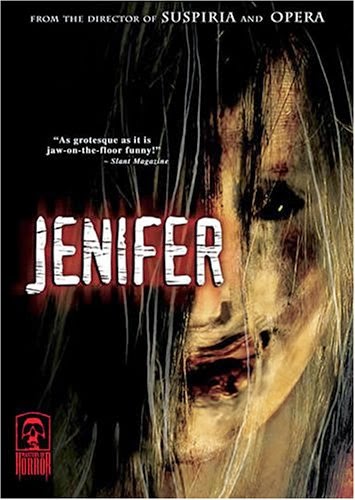
It seems that all the great Italian genre filmmakers eventually turn to television at some point. The last film Mario Bava worked on was a TV project entitled The Venus of Ille (1979), a tag-team effort between Bava and son Lamberto who of course also found himself at the helm of many a TV movie in the 80’s. Ruggero Deodato began his career making commercials and continued to do so throughout his filmmaking career. In 1989 Lucio Fulci and Umberto Lenzi teamed up for the House of Doom series with Fulci directing two made for TV films for the series, The Sweet House of Horrors and The House of Clocks, and Lenzi directing the other two, The House of Lost Souls and The House of Witchcraft. For the most part Sergio Martino has worked almost exclusively in television since the early 90’s, even directing the giallo mini-series Private Crimes (1993). Perhaps due to his legacy (and no doubt box office dependability in Italy), Dario Argento has managed to remain active in theatrical features although in 2005 he too took the TV route. That year not only saw Argento direct the TV movie homage to Hitchcock appropriately entitled Do You Like Hitchcock? but also Argento’s entry in the first season of Showtime’s Masters of Horror series Jenifer, one of the highlights of the first season and one of Argento’s most atypical and perverse films.
While witnessing a deranged man attempting to butcher a defenseless woman (Carrie Anne Fleming), detective Frank Spivey (Steven Weber) has no choice but to shoot the man dead. He discovers the woman’s face to be horribly disfigured and that almost nothing is known about her other than her name being Jenifer. Soon Frank is unable to get Jenifer out of his thoughts and feeling guilty about her having no place to go, Frank takes Jenifer home with him, much to the horror of his wife and son who quickly leave after discovering Jenifer’s barbaric side. Frank soon discovers another side of Jenifer, that she is a nymphomaniac with an insatiable sexual desire that he is unable to deny. Completely under Jenifer’s spell, Frank retreats to a cabin in the woods with Jenifer in a new town, a decision that can only end in disaster.
Going back and forth between being disgusting, erotic and hilarious and at times all three at once, Jenifer, both the film and the titular character are definitely oddities. Running at a rather brief 58 minutes, the film wastes little to no time getting down to business in terms of Jenifer showing her true nature and Frank’s downfall that that goes along with it. For some this might seem like jumping the gun a bit in terms of character development but it really gives the character of Jenifer an even greater mystique and makes Frank’s descent from family man and police officer to delirious drifter all the more haunting. Argento is certainly fascinated with the idea of a man willing to have sex with a women with a perfect body (which Jenifer has) in spite of her hideously mangled face and the sex scenes do provide some squirm inducing moments but they also serve as examples of the films deranged sense of humor. Visually the film is Argento at his most straightforward as the story really didn’t call for any directorial flamboyance however when the time comes to show just how much damage Jenifer can do with her teeth, Argento doesn’t hold back on the violence one bit and the effects are outstanding, the main highlight obviously being Jenifer’s face which is legitimately frightening. Under all the make-up Carrie Anne Fleming does a fantastic job with nothing but body language and manages to convey a sense of sadness about Jenifer while still being terrifying.
Normally when most fans think of the Masters of Horror series and censorship the banning of Takashi Miike’s Imprint (2006) comes to mind, however Jenifer is notable for being the first episode of the Masters of Horror series to require cuts prior to broadcast. There were two brief instances of Jenifer performing oral sex that just didn’t fly with the network, however they do make an appearance during a making-of documentary on the DVD. What’s also revealed on the DVD is just how far Argento originally wanted to go with the sexual content, even requesting that the make-up crew create an “alien vagina”, as Argento described it, for Jenifer out of a smorgasbord of parts although that never ended up being put to use. What’s also interesting that that lead actor Steven Weber also wrote the screenplay which was adapted from a 10 page comic originally published in 1974 in the 63rd issue Creepy. As far Masters of Horror goes, Jenifer is one of the best the series had to offer but it also works great as a stand alone film, albeit a short one. Its an original mix of horror, sex and just the right amount of humor and a fairly unique direction taken by Argento who would return to direct a second episode of the series the following season, the equally bizarre Pelts (2006). One of his finest, more contemporary efforts.
While witnessing a deranged man attempting to butcher a defenseless woman (Carrie Anne Fleming), detective Frank Spivey (Steven Weber) has no choice but to shoot the man dead. He discovers the woman’s face to be horribly disfigured and that almost nothing is known about her other than her name being Jenifer. Soon Frank is unable to get Jenifer out of his thoughts and feeling guilty about her having no place to go, Frank takes Jenifer home with him, much to the horror of his wife and son who quickly leave after discovering Jenifer’s barbaric side. Frank soon discovers another side of Jenifer, that she is a nymphomaniac with an insatiable sexual desire that he is unable to deny. Completely under Jenifer’s spell, Frank retreats to a cabin in the woods with Jenifer in a new town, a decision that can only end in disaster.
Going back and forth between being disgusting, erotic and hilarious and at times all three at once, Jenifer, both the film and the titular character are definitely oddities. Running at a rather brief 58 minutes, the film wastes little to no time getting down to business in terms of Jenifer showing her true nature and Frank’s downfall that that goes along with it. For some this might seem like jumping the gun a bit in terms of character development but it really gives the character of Jenifer an even greater mystique and makes Frank’s descent from family man and police officer to delirious drifter all the more haunting. Argento is certainly fascinated with the idea of a man willing to have sex with a women with a perfect body (which Jenifer has) in spite of her hideously mangled face and the sex scenes do provide some squirm inducing moments but they also serve as examples of the films deranged sense of humor. Visually the film is Argento at his most straightforward as the story really didn’t call for any directorial flamboyance however when the time comes to show just how much damage Jenifer can do with her teeth, Argento doesn’t hold back on the violence one bit and the effects are outstanding, the main highlight obviously being Jenifer’s face which is legitimately frightening. Under all the make-up Carrie Anne Fleming does a fantastic job with nothing but body language and manages to convey a sense of sadness about Jenifer while still being terrifying.
Normally when most fans think of the Masters of Horror series and censorship the banning of Takashi Miike’s Imprint (2006) comes to mind, however Jenifer is notable for being the first episode of the Masters of Horror series to require cuts prior to broadcast. There were two brief instances of Jenifer performing oral sex that just didn’t fly with the network, however they do make an appearance during a making-of documentary on the DVD. What’s also revealed on the DVD is just how far Argento originally wanted to go with the sexual content, even requesting that the make-up crew create an “alien vagina”, as Argento described it, for Jenifer out of a smorgasbord of parts although that never ended up being put to use. What’s also interesting that that lead actor Steven Weber also wrote the screenplay which was adapted from a 10 page comic originally published in 1974 in the 63rd issue Creepy. As far Masters of Horror goes, Jenifer is one of the best the series had to offer but it also works great as a stand alone film, albeit a short one. Its an original mix of horror, sex and just the right amount of humor and a fairly unique direction taken by Argento who would return to direct a second episode of the series the following season, the equally bizarre Pelts (2006). One of his finest, more contemporary efforts.
Monday, December 28, 2015
The Line, The Cross & The Curve (1993)
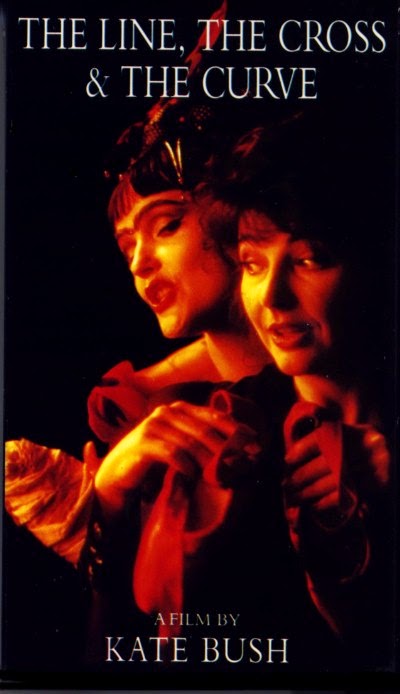
With a debut single like “Wuthering Heights”, albums like The Dreaming and conceptual suits like “The Ninth Wave”, Kate Bush is anything but predictable with seemingly everything she’s involved with coming out of left field. As evidenced by her music, Bush is clearly a film fanatic and has an obvious appreciation for cinema of a slightly sinister nature having expressed admiration for Hitchcock in interviews as well as writing songs like “The Wedding List” based on Truffaut’s The Bride Wore Black (1968), “Get Out of My House” inspired by The Shining (1980) and of course the sampling of the “Its in the trees! Its coming!” line from Curse of the Demon (1957) on the title track for the Hounds of Love album. There has always been a visual side to Bush’s music and with The Sensual World album Bush took to directing her own videos. For her 1993 album The Red Shoes, Bush again chose to do things a bit differently. Rather than simply film videos for the singles, Bush instead chose to write, direct and star in a film around the songs loosely inspired by the 1948 Michael Powell film which gave The Red Shoes album its name. In classic Bush fashion, the resulting film, The Line, The Cross & The Curve is as bizarre as it is original and left many, even some of Bush’s most loyal supporters scratching their heads.
Following a rehearsal, a dancer (Bush) is startled when out of nowhere a mysterious woman (Miranda Richardson) appears before her from behind her mirror. The woman frantically begs the dancer to help her return home, which she agrees do to by simply drawing a line, a cross and a curve on three sheets of paper. As a gift, the women gives the dancer her pair of red dancing shoes, however once she puts them on she realizes she’s been tricked as the shoes are cursed and she is unable to stop dancing. A strange guide appears beckoning her and the dancer is sucked into a fantasy world behind the mirror, forced to find the woman and free herself from the cursed red shoes.
Hardly surprising considering its creator, The Line, The Cross & The Curve is a quintessential Bush creation being wonderfully weird and defying both convention and any attempt to pigeonhole it. Despite being constructed around six music videos, the film is much more than simply a collection of video clips and at the same time the last thing the film plays out like is a standard musical. Whatever it is, it works. One of the reasons it works as well as it does is because the transitions from the music videos and the narrative interruptions in-between are smoothly executed and move the story along quite nicely no matter how illogical it may seem. Its the videos though which are the main attraction. As a director, Bush clearly has an excellent eye and there is certainly isn’t a lack of innovative ideas with each of the videos having their own distinct visual personality (and musical as well with The Red Shoes being one of Bush’s most eclectic albums) with opener “Rubberband Girl” showcasing Bush’s innovative dancing, “The Red Shoes” recalling the phantasmagoric flamboyance of Ken Russell whereas it would appear David Lynch was a source of inspiration for Bush during the opening moments of “Lily”. On the opposite end of the spectrum would be the euphoric, almost ceremonial fruit squishing set to the tropical tune of “Eat the Music”. Even a relativity simple video like “And So Is Love” feels like a scene out of a gothic horror film thanks to Bush’s stylish lighting choices.
In August of 2014 when Bush made her return to the live stage with her series of “Before the Dawn” concerts in London there seemed to be a newfound interest in all things Kate Bush with multiple albums even re-entering the British charts. Despite this, The Line, The Cross & The Curve got little to no mention at all and that was probably to Bush’s liking. While there are numerous Bush fans who’ve found the film hard to take too, Bush herself is perhaps its harshest critic, claiming in interviews that she feels she let her crew and Miranda Richardson down and is really only happy with very little of the film. She also blatantly referred to it as a “load of bullocks”. In fact Bush also expressed disappointment in the production of The Red Shoes album even re-recording seven tracks for her 2011 album The Director’s Cut. The film has yet to be released on DVD and unless Bush has a change of opinion it will probably stay that way for a while which is too bad as its really a testament to Bush‘s creativity. Fans of Bush who’ve yet to see it should track it down just because but fans of strange cinema that might not be familiar with Bush should also seek out The Line, The Cross & The Curve and in the process be introduced to a brilliant artist.
Monday, December 14, 2015
Bordel SS (1978)
AKA Bordello a Parigi (Bordello in Paris)
Unlike fellow Euro cult contemporaries Jess Franco and Jean Rollin who turned to adult features for financial purposes (or had their films meddled with by producers and distributors who later added hardcore inserts) and usually worked under pseudonyms, José Bénazéraf had no issues whatsoever taking the hardcore route, proudly signing his name on all his adult films earning himself the moniker “the Goddard of porn”. Although Bénazéraf didn’t make the full jump into the adult film market until the mid-70’s, the seeds for his transition were planted long before with his films drawing the ire of the French censors with their melding of sex, violence and radical politics which eventually led to Bénazéraf’s Joë Caligula (1966) being outright banned the night before its intended premier, a stunt which cost Bénazéraf one million of his own Francs. Bénazéraf was once quoted as saying “In bourgeois society, eroticism is a form of anarchy” and like many others of the era considered making adult films a form of social rebellion but he also believed that it could be done artistically, although he would eventually begin shooting on video with increasingly low budgets. Out of all of Bénazéraf’s hardcore films, Bordel SS is perhaps the most interesting as it see’s Bénazéraf trying his hand at the nazisploitation subgenre and the resulting film turned out to be one of the most ambitious entries said subgenre has to offer.
During the Nazi occupation of France, one particular Paris brothel becomes a popular hangout for a Nazi unit stationed nearby. Captain Willhem, a decorated and highly respected Nazi commander soon becomes a regular, although complications being to arise when Willhem finds himself falling for Amelia, one of the prostitutes, whom unbeknownst to Willhem knows more than she should regarding the war as she’s providing information to the resistance movement, putting herself and the rest of the prostitutes in grave danger.
Bordel SS is certainly an oddity in that despite being not just a nazisploitation film but a hardcore film belonging to a subgenre notorious for its rampant sleaziness, those looking for a barrage of bad taste will quickly become bored with the film. Bordel SS is first and foremost a story driven film, however there is one thing that holds in back in the eyes of many and that being the editing in the Italian version of the film, which is the most widely available, is rather choppy and as a result the narrative probably doesn’t make much sense. The fact that the film is non-linier also adds to the confusion however with subsequent viewings more loose ends are tied up and the film feels more complete. Clearly the story came first for Bénazéraf as the actual hardcore scenes feel almost like an afterthought although Bénazéraf’s occasional use of mirrors does add some visual flair. What’s also refreshing is that the prostitutes aren’t simply fodder for the sex scenes, they’re all fairly rounded characters each with their own distinct personality and the way Bénazéraf has Willhem’s “relationship” with Amelia play out is quite interesting. That’s not to say that Bénazéraf completely forgets about the mandatory nazisploitation sleaze as its well represented here in the form of the bizarre sadomasochistic lesbian fantasies (which eventually become reality) of an imposing female Nazi officer and torture via electrocution. The film also benefits from high production values featuring authentic looking costumes and even some WWII era vehicles.
Bordel SS is also notable for featuring a still dark haired Brigitte Lahaie in an early role. Although her part is technically a supporting role, it didn’t stop distributors Punch Video from making her the main attraction on the VHS box when the film hit video. When it came to working with Bénazéraf, Lahaie had mixed feeling stating in the episode of the 1999 Eurotika! documentary series centered around Bénazéraf “Bénazéraf is a crazy man you know. Sometimes it was wonderful and sometimes is was very bad… he don’t like people, he don’t like actresses and don’t like actors. It was difficult to work with him”. Bordel SS also has the distinction, perhaps due to its nazisploitation credentials, of being one of the easier Bénazéraf films to track down in an English friendly version. The film does have an official DVD release in France from a company called LCJ who also released Bénazéraf’s Joë Caligula, Frustration (1971), The French Love (1973), Le bordel 1900 (1973), Anthologie des scènes interdites (1975), Brantôme 81 (1981) and Les contes galants de la Fontaine (1981) although unfortunately none of the discs are subtitled. In pure Bénazéraf fashion, Bordel SS is a film that’s liable to frustrate many, however Bénazéraf’s ambitions with the film make it unique in the field of nazisploitation and the type of political (s)exploitation film that only Bénazéraf would be audacious enough to make.
Unlike fellow Euro cult contemporaries Jess Franco and Jean Rollin who turned to adult features for financial purposes (or had their films meddled with by producers and distributors who later added hardcore inserts) and usually worked under pseudonyms, José Bénazéraf had no issues whatsoever taking the hardcore route, proudly signing his name on all his adult films earning himself the moniker “the Goddard of porn”. Although Bénazéraf didn’t make the full jump into the adult film market until the mid-70’s, the seeds for his transition were planted long before with his films drawing the ire of the French censors with their melding of sex, violence and radical politics which eventually led to Bénazéraf’s Joë Caligula (1966) being outright banned the night before its intended premier, a stunt which cost Bénazéraf one million of his own Francs. Bénazéraf was once quoted as saying “In bourgeois society, eroticism is a form of anarchy” and like many others of the era considered making adult films a form of social rebellion but he also believed that it could be done artistically, although he would eventually begin shooting on video with increasingly low budgets. Out of all of Bénazéraf’s hardcore films, Bordel SS is perhaps the most interesting as it see’s Bénazéraf trying his hand at the nazisploitation subgenre and the resulting film turned out to be one of the most ambitious entries said subgenre has to offer.
During the Nazi occupation of France, one particular Paris brothel becomes a popular hangout for a Nazi unit stationed nearby. Captain Willhem, a decorated and highly respected Nazi commander soon becomes a regular, although complications being to arise when Willhem finds himself falling for Amelia, one of the prostitutes, whom unbeknownst to Willhem knows more than she should regarding the war as she’s providing information to the resistance movement, putting herself and the rest of the prostitutes in grave danger.
Bordel SS is certainly an oddity in that despite being not just a nazisploitation film but a hardcore film belonging to a subgenre notorious for its rampant sleaziness, those looking for a barrage of bad taste will quickly become bored with the film. Bordel SS is first and foremost a story driven film, however there is one thing that holds in back in the eyes of many and that being the editing in the Italian version of the film, which is the most widely available, is rather choppy and as a result the narrative probably doesn’t make much sense. The fact that the film is non-linier also adds to the confusion however with subsequent viewings more loose ends are tied up and the film feels more complete. Clearly the story came first for Bénazéraf as the actual hardcore scenes feel almost like an afterthought although Bénazéraf’s occasional use of mirrors does add some visual flair. What’s also refreshing is that the prostitutes aren’t simply fodder for the sex scenes, they’re all fairly rounded characters each with their own distinct personality and the way Bénazéraf has Willhem’s “relationship” with Amelia play out is quite interesting. That’s not to say that Bénazéraf completely forgets about the mandatory nazisploitation sleaze as its well represented here in the form of the bizarre sadomasochistic lesbian fantasies (which eventually become reality) of an imposing female Nazi officer and torture via electrocution. The film also benefits from high production values featuring authentic looking costumes and even some WWII era vehicles.
Bordel SS is also notable for featuring a still dark haired Brigitte Lahaie in an early role. Although her part is technically a supporting role, it didn’t stop distributors Punch Video from making her the main attraction on the VHS box when the film hit video. When it came to working with Bénazéraf, Lahaie had mixed feeling stating in the episode of the 1999 Eurotika! documentary series centered around Bénazéraf “Bénazéraf is a crazy man you know. Sometimes it was wonderful and sometimes is was very bad… he don’t like people, he don’t like actresses and don’t like actors. It was difficult to work with him”. Bordel SS also has the distinction, perhaps due to its nazisploitation credentials, of being one of the easier Bénazéraf films to track down in an English friendly version. The film does have an official DVD release in France from a company called LCJ who also released Bénazéraf’s Joë Caligula, Frustration (1971), The French Love (1973), Le bordel 1900 (1973), Anthologie des scènes interdites (1975), Brantôme 81 (1981) and Les contes galants de la Fontaine (1981) although unfortunately none of the discs are subtitled. In pure Bénazéraf fashion, Bordel SS is a film that’s liable to frustrate many, however Bénazéraf’s ambitions with the film make it unique in the field of nazisploitation and the type of political (s)exploitation film that only Bénazéraf would be audacious enough to make.
Monday, November 30, 2015
Doriana Gray (1976)
AKA Die Marquise von Sade (The 1000 Shades of Doriana Gray), Das Bildnis der Doriana Gray (The Portrait of Doriana Gray), Dirty Dracula and Ejaculations
Given the oftentimes highly sexual nature of his films, Jess Franco was, and still is labeled a pornographer by detractors. While this is hardly surprising with low hanging fruit being the easiest to pick, what’s ironic is that the films which lead most people who don’t understand Franco’s work to refer to it as porn are hardly pornographic. Of course that’s not to say that Franco didn’t directed his share of hardcore adult features which indeed he did, mainly in the 80’s and for commercial purposes. Franco himself was the first to admit that he had little interest in shooting hardcore films and the work bored him. Its well known that Franco’s films often suffered at the hands of producers and distributors and many of his films exist in several versions due to the common practice of a hardcore version of a film to be released featuring pornographic inserts in order to sell the film in different markets. Some of the most famous examples being Female Vampire (1973), The Other Side of the Mirror (1973), Lorna the Exorcist (1974) and The Hot Nights of Linda (1975). What makes Doriana Gray unique is that not only is the hardcore version is the most widely seen and accepted and perhaps the right version to watch, the film also stands as one of Franco’s most genuinely haunting featuring what is quite possibly Lina Romay’s finest performance.
A journalist from a woman’s magazine (Monica Swinn) arrives at the estate of secluded millionaire Doriana Gray (Lina Romay) believing that Doriana’s story would interest her readers. Perpetually lonely, Doriana possesses eternal beauty at the cost of draining the life of her lovers. Doriana is also incapable of feeling sexual pleasure, the results of complications that arose after being separated at birth from a twin sister (also Romay) whom Doriana keeps locked away in an asylum, driven mad by lust from feeling all of the pleasure Doriana cannot. While recounting her tale to the journalist, Doriana comes to the realization that her starvation for physical satisfaction and her sisters nymphomania are drawing the sisters, and their eventual fates closer.
Franco was certainty no stranger when it came to drawing parallels between sex and death, perhaps most famously with Female Vampire, a film which Doriana Gray shares several similarities with, and would continue to do so for the rest of his career although in many ways Doriana Gray could be considered the final word on the subject as far as Franco is concerned as never before had he approached the topic in such a direct manner. Just like in Female Vampire, Franco recycles the idea of the morose woman longing for impossible companionship sucking the life force (albeit regretfully) from her lovers through sex, yet here Franco takes the idea much further with the addition of a twin sister making the film much more tragic and perverse. From a technical and narrative standpoint the film is quite minimal, driven by a seedy mood of uneasiness that is persistent throughout which contrasts nicely with the beauty of Doriana’s estate and the surrounding locations as well as the hypnotizing exotic, eastern flavored score. Franco operated the film himself making it much more personal, idolizing Lina like never before who delivers a truly astonishing performance, particularly in the role of the twin sister who’s outbursts of raw sexual mania are legitimately frightening. Despite featuring hardcore scenes, the film could hardly be considered “erotic” taking into considering the material and the air of melancholy the surrounds the film and Franco makes no attempt to eroticize the sex scenes either never forgetting the doom that follows Doriana everywhere.
Ascot Elite released the film as part of their Jess Franco Golden Goya Collection under the Die Marquise von Sade title which included the softcore edit of the film as a bonus and its ironic that the soft version suffers from the same problems that most hardcore edits of Franco’s films suffer from. The biggest issue being the jumpy editing making it glaringly obvious that something had been edited out but what’s also obvious is that there is footage which was clearly shot after the original film had been finished and added in at a later date. Interesting thing regarding the timing of the release of Doriana Gray, its was released the same year as In the Realm of the Senses (1976), of the most important “mainstream” films to feature hardcore scenes. Given that films featuring unsimulated sex have essentially become somewhat respectable, it’d be interesting to see how the film would fare if it were released today compared to a Catherine Breillat film or say Lars von Trier’s Nymphomaniac (2014). Doriana Gray holds an interesting spot within Franco’s filmography because of it being of the very few, possibly the only one of his films where the hardcore scenes actually work but the main selling point of the film is Lina’s jaw-dropping performance elevating Doriana Gray to an entirely new level. An adult horror masterpiece and one of Franco’s and Lina’s finest hours.
Given the oftentimes highly sexual nature of his films, Jess Franco was, and still is labeled a pornographer by detractors. While this is hardly surprising with low hanging fruit being the easiest to pick, what’s ironic is that the films which lead most people who don’t understand Franco’s work to refer to it as porn are hardly pornographic. Of course that’s not to say that Franco didn’t directed his share of hardcore adult features which indeed he did, mainly in the 80’s and for commercial purposes. Franco himself was the first to admit that he had little interest in shooting hardcore films and the work bored him. Its well known that Franco’s films often suffered at the hands of producers and distributors and many of his films exist in several versions due to the common practice of a hardcore version of a film to be released featuring pornographic inserts in order to sell the film in different markets. Some of the most famous examples being Female Vampire (1973), The Other Side of the Mirror (1973), Lorna the Exorcist (1974) and The Hot Nights of Linda (1975). What makes Doriana Gray unique is that not only is the hardcore version is the most widely seen and accepted and perhaps the right version to watch, the film also stands as one of Franco’s most genuinely haunting featuring what is quite possibly Lina Romay’s finest performance.
A journalist from a woman’s magazine (Monica Swinn) arrives at the estate of secluded millionaire Doriana Gray (Lina Romay) believing that Doriana’s story would interest her readers. Perpetually lonely, Doriana possesses eternal beauty at the cost of draining the life of her lovers. Doriana is also incapable of feeling sexual pleasure, the results of complications that arose after being separated at birth from a twin sister (also Romay) whom Doriana keeps locked away in an asylum, driven mad by lust from feeling all of the pleasure Doriana cannot. While recounting her tale to the journalist, Doriana comes to the realization that her starvation for physical satisfaction and her sisters nymphomania are drawing the sisters, and their eventual fates closer.
Franco was certainty no stranger when it came to drawing parallels between sex and death, perhaps most famously with Female Vampire, a film which Doriana Gray shares several similarities with, and would continue to do so for the rest of his career although in many ways Doriana Gray could be considered the final word on the subject as far as Franco is concerned as never before had he approached the topic in such a direct manner. Just like in Female Vampire, Franco recycles the idea of the morose woman longing for impossible companionship sucking the life force (albeit regretfully) from her lovers through sex, yet here Franco takes the idea much further with the addition of a twin sister making the film much more tragic and perverse. From a technical and narrative standpoint the film is quite minimal, driven by a seedy mood of uneasiness that is persistent throughout which contrasts nicely with the beauty of Doriana’s estate and the surrounding locations as well as the hypnotizing exotic, eastern flavored score. Franco operated the film himself making it much more personal, idolizing Lina like never before who delivers a truly astonishing performance, particularly in the role of the twin sister who’s outbursts of raw sexual mania are legitimately frightening. Despite featuring hardcore scenes, the film could hardly be considered “erotic” taking into considering the material and the air of melancholy the surrounds the film and Franco makes no attempt to eroticize the sex scenes either never forgetting the doom that follows Doriana everywhere.
Ascot Elite released the film as part of their Jess Franco Golden Goya Collection under the Die Marquise von Sade title which included the softcore edit of the film as a bonus and its ironic that the soft version suffers from the same problems that most hardcore edits of Franco’s films suffer from. The biggest issue being the jumpy editing making it glaringly obvious that something had been edited out but what’s also obvious is that there is footage which was clearly shot after the original film had been finished and added in at a later date. Interesting thing regarding the timing of the release of Doriana Gray, its was released the same year as In the Realm of the Senses (1976), of the most important “mainstream” films to feature hardcore scenes. Given that films featuring unsimulated sex have essentially become somewhat respectable, it’d be interesting to see how the film would fare if it were released today compared to a Catherine Breillat film or say Lars von Trier’s Nymphomaniac (2014). Doriana Gray holds an interesting spot within Franco’s filmography because of it being of the very few, possibly the only one of his films where the hardcore scenes actually work but the main selling point of the film is Lina’s jaw-dropping performance elevating Doriana Gray to an entirely new level. An adult horror masterpiece and one of Franco’s and Lina’s finest hours.
Subscribe to:
Posts (Atom)