Monday, January 25, 2016

Pelts (2006)

Looking back on Showtime’s Masters of Horror anthology series, the show was really the first of its kind. While the concept of genre anthology television shows had been around since the 50’s, Masters of Horror was the first horror anthology show where almost every episode was directed by, as the title of the show implied, a veteran of the horror genre. The series first season reads like a who’s who of well-respected genre stalwarts like John Carpenter, Dario Argneto, Tobe Hooper, Joe Dante, John Landis, Stuart Gordon, Larry Cohen and Takashi Miike (despite his episode Imprint (2006) , which was intended to be the season one finale being banned from broadcast in America) amongst others. While some of the episodes had a tendency to be hit or miss, the good ones were really good, some even great and along with Gordon’s Dreams in the Witch House (2005) and Miike’s Imprint, Argento’s Jenifer (2005) was undoubtedly one of the best, not to mention unusual episodes of the first season and an interesting stylistic detour for Argento. Several of the directors from the first season returned for the second including Carpenter, Hooper, Landis, Dante and Gordon. Argento too retuned to helm a second episode and just like Jenifer, the resulting film, the equally strange and blood-soaked Pelts was easily the biggest highlight of the second season as well as a highlight in Argento’s more recent catalogue.

Fur trader Jake Feldman (Meat Loaf) has only one desire, Shanna, a stripper whom he’s long been obsessed with. While watching Shanna dance one night, Jake gets a call from Jeb Jameson (John Saxon), a local fur trapper who claims he’s in possession of raccoon pelts that will make Jake a rich man. The pelts are indeed special as Jake soon discovers when arriving at Jebs house but he also discovers the dead bodies of Jeb and his son, an omen which Jake chooses to ignore as the pelts are cursed causing anyone who comes into contact with them to lose their minds. Jake plans on making a coat out of the pelts and proposes to Shanna that she wear it in a fashion show hoping to finally get what he wants, albeit at the price of his own skin.

Whereas Jenifer, Argento’s previous entry in the Masters of Horror series, was somewhat atypical for Argento in terms of subject matter and direction, Pelts has Argento’s fingerprints all over it from its grotesque, almost fairytale-esque storyline to its stylish visual design. It becomes apparent early on that Pelts is going to be a bizarre little film with the main plot device being cursed raccoon pelts driving people to commit horrific acts, and indeed it is rather outlandish, even absurd in spots especially when it comes too the origin of the raccoons and the history of a mysterious “ancient city”, yet Argento plays the film mostly straight which was a wise move as the films tone fits with the side themes of greed and obsession. Being made for TV the film only runs a brief 59 minutes but gets a lot accomplished in that short time frame and despite the fact that a logic is given for all the bloodshed that happens as a result of the pelts, the actual reasoning is again so odd that no mystique is ever sacrificed. What also makes the film so transfixing is Argento’s matter of fact presentation of the violence which is elaborate as it is unflinching. Faces are ripped apart inside animal traps, eyes, nostrils and mouths are sewn shut and sharp objects are taken to flesh culminating in an astonishing gore set-piece involving the magnetic Meat Loaf, who’s excellent by the way, in the role of the love to hate Jake, and his own “pelts”.

Considering the themes of selfish people getting their comeuppance working in the fur industry, Pelts could be interpreted as an attack on the fur industry however Argento claims that his intentions while making the film weren’t motivated be morals or politics but rather the idea that, despite the bizarreness of the plot, the story was as Argento puts it, a “classic” horror tale. What was intentional was the slick lighting as Argento wanted the film to be a display of colors and there’s little to no question as to who is behind the camera here. While obviously done on a much smaller scale than say Suspiria (1977) or Inferno (1980), Argento’s mastery of the color palate is ever present. Pelts also marked the first time John Saxon appeared in an Argento film since Tenebre (1982) and although his role is small Saxon is always a welcome addition to any film. Pelts was Argento’s last bit of TV work before returning to the big screen with the often misunderstood Mother of Tears (2007) and his two stints on Masters of Horror certainly do make for interesting additions to his filmography. Pelts is over the top, gruesome and at times sexy, but most importantly its an original piece of horror that showcases Argento’s knack for outlandish material and should serve as a breath of fresh air for those fed up with current bland genre offerings.

Monday, January 11, 2016

Jenifer (2005)

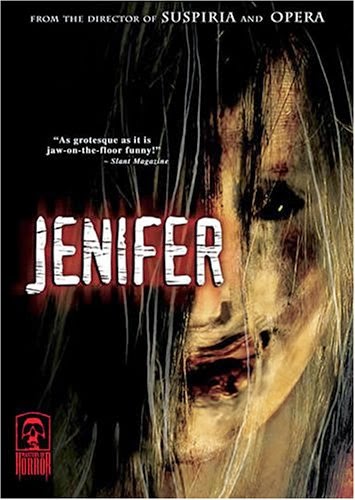
It seems that all the great Italian genre filmmakers eventually turn to television at some point. The last film Mario Bava worked on was a TV project entitled The Venus of Ille (1979), a tag-team effort between Bava and son Lamberto who of course also found himself at the helm of many a TV movie in the 80’s. Ruggero Deodato began his career making commercials and continued to do so throughout his filmmaking career. In 1989 Lucio Fulci and Umberto Lenzi teamed up for the House of Doom series with Fulci directing two made for TV films for the series, The Sweet House of Horrors and The House of Clocks, and Lenzi directing the other two, The House of Lost Souls and The House of Witchcraft. For the most part Sergio Martino has worked almost exclusively in television since the early 90’s, even directing the giallo mini-series Private Crimes (1993). Perhaps due to his legacy (and no doubt box office dependability in Italy), Dario Argento has managed to remain active in theatrical features although in 2005 he too took the TV route. That year not only saw Argento direct the TV movie homage to Hitchcock appropriately entitled Do You Like Hitchcock? but also Argento’s entry in the first season of Showtime’s Masters of Horror series Jenifer, one of the highlights of the first season and one of Argento’s most atypical and perverse films.

While witnessing a deranged man attempting to butcher a defenseless woman (Carrie Anne Fleming), detective Frank Spivey (Steven Weber) has no choice but to shoot the man dead. He discovers the woman’s face to be horribly disfigured and that almost nothing is known about her other than her name being Jenifer. Soon Frank is unable to get Jenifer out of his thoughts and feeling guilty about her having no place to go, Frank takes Jenifer home with him, much to the horror of his wife and son who quickly leave after discovering Jenifer’s barbaric side. Frank soon discovers another side of Jenifer, that she is a nymphomaniac with an insatiable sexual desire that he is unable to deny. Completely under Jenifer’s spell, Frank retreats to a cabin in the woods with Jenifer in a new town, a decision that can only end in disaster.

Going back and forth between being disgusting, erotic and hilarious and at times all three at once, Jenifer, both the film and the titular character are definitely oddities. Running at a rather brief 58 minutes, the film wastes little to no time getting down to business in terms of Jenifer showing her true nature and Frank’s downfall that that goes along with it. For some this might seem like jumping the gun a bit in terms of character development but it really gives the character of Jenifer an even greater mystique and makes Frank’s descent from family man and police officer to delirious drifter all the more haunting. Argento is certainly fascinated with the idea of a man willing to have sex with a women with a perfect body (which Jenifer has) in spite of her hideously mangled face and the sex scenes do provide some squirm inducing moments but they also serve as examples of the films deranged sense of humor. Visually the film is Argento at his most straightforward as the story really didn’t call for any directorial flamboyance however when the time comes to show just how much damage Jenifer can do with her teeth, Argento doesn’t hold back on the violence one bit and the effects are outstanding, the main highlight obviously being Jenifer’s face which is legitimately frightening. Under all the make-up Carrie Anne Fleming does a fantastic job with nothing but body language and manages to convey a sense of sadness about Jenifer while still being terrifying.

Normally when most fans think of the Masters of Horror series and censorship the banning of Takashi Miike’s Imprint (2006) comes to mind, however Jenifer is notable for being the first episode of the Masters of Horror series to require cuts prior to broadcast. There were two brief instances of Jenifer performing oral sex that just didn’t fly with the network, however they do make an appearance during a making-of documentary on the DVD. What’s also revealed on the DVD is just how far Argento originally wanted to go with the sexual content, even requesting that the make-up crew create an “alien vagina”, as Argento described it, for Jenifer out of a smorgasbord of parts although that never ended up being put to use. What’s also interesting that that lead actor Steven Weber also wrote the screenplay which was adapted from a 10 page comic originally published in 1974 in the 63rd issue Creepy. As far Masters of Horror goes, Jenifer is one of the best the series had to offer but it also works great as a stand alone film, albeit a short one. Its an original mix of horror, sex and just the right amount of humor and a fairly unique direction taken by Argento who would return to direct a second episode of the series the following season, the equally bizarre Pelts (2006). One of his finest, more contemporary efforts.


Monday, December 28, 2015

The Line, The Cross & The Curve (1993)

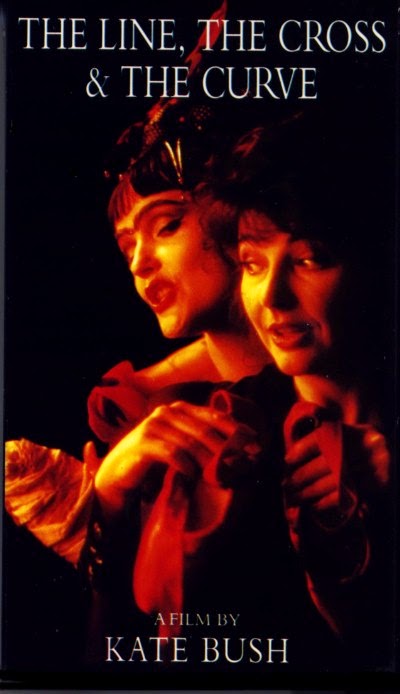
With a debut single like “Wuthering Heights”, albums like The Dreaming and conceptual suits like “The Ninth Wave”, Kate Bush is anything but predictable with seemingly everything she’s involved with coming out of left field. As evidenced by her music, Bush is clearly a film fanatic and has an obvious appreciation for cinema of a slightly sinister nature having expressed admiration for Hitchcock in interviews as well as writing songs like “The Wedding List” based on Truffaut’s The Bride Wore Black (1968), “Get Out of My House” inspired by The Shining (1980) and of course the sampling of the “Its in the trees! Its coming!” line from Curse of the Demon (1957) on the title track for the Hounds of Love album. There has always been a visual side to Bush’s music and with The Sensual World album Bush took to directing her own videos. For her 1993 album The Red Shoes, Bush again chose to do things a bit differently. Rather than simply film videos for the singles, Bush instead chose to write, direct and star in a film around the songs loosely inspired by the 1948 Michael Powell film which gave The Red Shoes album its name. In classic Bush fashion, the resulting film, The Line, The Cross & The Curve is as bizarre as it is original and left many, even some of Bush’s most loyal supporters scratching their heads.

Following a rehearsal, a dancer (Bush) is startled when out of nowhere a mysterious woman (Miranda Richardson) appears before her from behind her mirror. The woman frantically begs the dancer to help her return home, which she agrees do to by simply drawing a line, a cross and a curve on three sheets of paper. As a gift, the women gives the dancer her pair of red dancing shoes, however once she puts them on she realizes she’s been tricked as the shoes are cursed and she is unable to stop dancing. A strange guide appears beckoning her and the dancer is sucked into a fantasy world behind the mirror, forced to find the woman and free herself from the cursed red shoes.

Hardly surprising considering its creator, The Line, The Cross & The Curve is a quintessential Bush creation being wonderfully weird and defying both convention and any attempt to pigeonhole it. Despite being constructed around six music videos, the film is much more than simply a collection of video clips and at the same time the last thing the film plays out like is a standard musical. Whatever it is, it works. One of the reasons it works as well as it does is because the transitions from the music videos and the narrative interruptions in-between are smoothly executed and move the story along quite nicely no matter how illogical it may seem. Its the videos though which are the main attraction. As a director, Bush clearly has an excellent eye and there is certainly isn’t a lack of innovative ideas with each of the videos having their own distinct visual personality (and musical as well with The Red Shoes being one of Bush’s most eclectic albums) with opener “Rubberband Girl” showcasing Bush’s innovative dancing, “The Red Shoes” recalling the phantasmagoric flamboyance of Ken Russell whereas it would appear David Lynch was a source of inspiration for Bush during the opening moments of “Lily”. On the opposite end of the spectrum would be the euphoric, almost ceremonial fruit squishing set to the tropical tune of “Eat the Music”. Even a relativity simple video like “And So Is Love” feels like a scene out of a gothic horror film thanks to Bush’s stylish lighting choices.

In August of 2014 when Bush made her return to the live stage with her series of “Before the Dawn” concerts in London there seemed to be a newfound interest in all things Kate Bush with multiple albums even re-entering the British charts. Despite this, The Line, The Cross & The Curve got little to no mention at all and that was probably to Bush’s liking. While there are numerous Bush fans who’ve found the film hard to take too, Bush herself is perhaps its harshest critic, claiming in interviews that she feels she let her crew and Miranda Richardson down and is really only happy with very little of the film. She also blatantly referred to it as a “load of bullocks”. In fact Bush also expressed disappointment in the production of The Red Shoes album even re-recording seven tracks for her 2011 album The Director’s Cut. The film has yet to be released on DVD and unless Bush has a change of opinion it will probably stay that way for a while which is too bad as its really a testament to Bush‘s creativity. Fans of Bush who’ve yet to see it should track it down just because but fans of strange cinema that might not be familiar with Bush should also seek out The Line, The Cross & The Curve and in the process be introduced to a brilliant artist.

Monday, December 14, 2015

Bordel SS (1978)

AKA Bordello a Parigi (Bordello in Paris)

Unlike fellow Euro cult contemporaries Jess Franco and Jean Rollin who turned to adult features for financial purposes (or had their films meddled with by producers and distributors who later added hardcore inserts) and usually worked under pseudonyms, José Bénazéraf had no issues whatsoever taking the hardcore route, proudly signing his name on all his adult films earning himself the moniker “the Goddard of porn”. Although Bénazéraf didn’t make the full jump into the adult film market until the mid-70’s, the seeds for his transition were planted long before with his films drawing the ire of the French censors with their melding of sex, violence and radical politics which eventually led to Bénazéraf’s Joë Caligula (1966) being outright banned the night before its intended premier, a stunt which cost Bénazéraf one million of his own Francs. Bénazéraf was once quoted as saying “In bourgeois society, eroticism is a form of anarchy” and like many others of the era considered making adult films a form of social rebellion but he also believed that it could be done artistically, although he would eventually begin shooting on video with increasingly low budgets. Out of all of Bénazéraf’s hardcore films, Bordel SS is perhaps the most interesting as it see’s Bénazéraf trying his hand at the nazisploitation subgenre and the resulting film turned out to be one of the most ambitious entries said subgenre has to offer.

During the Nazi occupation of France, one particular Paris brothel becomes a popular hangout for a Nazi unit stationed nearby. Captain Willhem, a decorated and highly respected Nazi commander soon becomes a regular, although complications being to arise when Willhem finds himself falling for Amelia, one of the prostitutes, whom unbeknownst to Willhem knows more than she should regarding the war as she’s providing information to the resistance movement, putting herself and the rest of the prostitutes in grave danger.

Bordel SS is certainly an oddity in that despite being not just a nazisploitation film but a hardcore film belonging to a subgenre notorious for its rampant sleaziness, those looking for a barrage of bad taste will quickly become bored with the film. Bordel SS is first and foremost a story driven film, however there is one thing that holds in back in the eyes of many and that being the editing in the Italian version of the film, which is the most widely available, is rather choppy and as a result the narrative probably doesn’t make much sense. The fact that the film is non-linier also adds to the confusion however with subsequent viewings more loose ends are tied up and the film feels more complete. Clearly the story came first for Bénazéraf as the actual hardcore scenes feel almost like an afterthought although Bénazéraf’s occasional use of mirrors does add some visual flair. What’s also refreshing is that the prostitutes aren’t simply fodder for the sex scenes, they’re all fairly rounded characters each with their own distinct personality and the way Bénazéraf has Willhem’s “relationship” with Amelia play out is quite interesting. That’s not to say that Bénazéraf completely forgets about the mandatory nazisploitation sleaze as its well represented here in the form of the bizarre sadomasochistic lesbian fantasies (which eventually become reality) of an imposing female Nazi officer and torture via electrocution. The film also benefits from high production values featuring authentic looking costumes and even some WWII era vehicles.

Bordel SS is also notable for featuring a still dark haired Brigitte Lahaie in an early role. Although her part is technically a supporting role, it didn’t stop distributors Punch Video from making her the main attraction on the VHS box when the film hit video. When it came to working with Bénazéraf, Lahaie had mixed feeling stating in the episode of the 1999 Eurotika! documentary series centered around Bénazéraf “Bénazéraf is a crazy man you know. Sometimes it was wonderful and sometimes is was very bad… he don’t like people, he don’t like actresses and don’t like actors. It was difficult to work with him”. Bordel SS also has the distinction, perhaps due to its nazisploitation credentials, of being one of the easier Bénazéraf films to track down in an English friendly version. The film does have an official DVD release in France from a company called LCJ who also released Bénazéraf’s Joë Caligula, Frustration (1971), The French Love (1973), Le bordel 1900 (1973), Anthologie des scènes interdites (1975), Brantôme 81 (1981) and Les contes galants de la Fontaine (1981) although unfortunately none of the discs are subtitled. In pure Bénazéraf fashion, Bordel SS is a film that’s liable to frustrate many, however Bénazéraf’s ambitions with the film make it unique in the field of nazisploitation and the type of political (s)exploitation film that only Bénazéraf would be audacious enough to make.

Monday, November 30, 2015

Doriana Gray (1976)

AKA Die Marquise von Sade (The 1000 Shades of Doriana Gray), Das Bildnis der Doriana Gray (The Portrait of Doriana Gray), Dirty Dracula and Ejaculations 

Given the oftentimes highly sexual nature of his films, Jess Franco was, and still is labeled a pornographer by detractors. While this is hardly surprising with low hanging fruit being the easiest to pick, what’s ironic is that the films which lead most people who don’t understand Franco’s work to refer to it as porn are hardly pornographic. Of course that’s not to say that Franco didn’t directed his share of hardcore adult features which indeed he did, mainly in the 80’s and for commercial purposes. Franco himself was the first to admit that he had little interest in shooting hardcore films and the work bored him. Its well known that Franco’s films often suffered at the hands of producers and distributors and many of his films exist in several versions due to the common practice of a hardcore version of a film to be released featuring pornographic inserts in order to sell the film in different markets. Some of the most famous examples being Female Vampire (1973), The Other Side of the Mirror (1973), Lorna the Exorcist (1974) and The Hot Nights of Linda (1975). What makes Doriana Gray unique is that not only is the hardcore version is the most widely seen and accepted and perhaps the right version to watch, the film also stands as one of Franco’s most genuinely haunting featuring what is quite possibly Lina Romay’s finest performance.

A journalist from a woman’s magazine (Monica Swinn) arrives at the estate of secluded millionaire Doriana Gray (Lina Romay) believing that Doriana’s story would interest her readers. Perpetually lonely, Doriana possesses eternal beauty at the cost of draining the life of her lovers. Doriana is also incapable of feeling sexual pleasure, the results of complications that arose after being separated at birth from a twin sister (also Romay) whom Doriana keeps locked away in an asylum, driven mad by lust from feeling all of the pleasure Doriana cannot. While recounting her tale to the journalist, Doriana comes to the realization that her starvation for physical satisfaction and her sisters nymphomania are drawing the sisters, and their eventual fates closer.

Franco was certainty no stranger when it came to drawing parallels between sex and death, perhaps most famously with Female Vampire, a film which Doriana Gray shares several similarities with, and would continue to do so for the rest of his career although in many ways Doriana Gray could be considered the final word on the subject as far as Franco is concerned as never before had he approached the topic in such a direct manner. Just like in Female Vampire, Franco recycles the idea of the morose woman longing for impossible companionship sucking the life force (albeit regretfully) from her lovers through sex, yet here Franco takes the idea much further with the addition of a twin sister making the film much more tragic and perverse. From a technical and narrative standpoint the film is quite minimal, driven by a seedy mood of uneasiness that is persistent throughout which contrasts nicely with the beauty of Doriana’s estate and the surrounding locations as well as the hypnotizing exotic, eastern flavored score. Franco operated the film himself making it much more personal, idolizing Lina like never before who delivers a truly astonishing performance, particularly in the role of the twin sister who’s outbursts of raw sexual mania are legitimately frightening. Despite featuring hardcore scenes, the film could hardly be considered “erotic” taking into considering the material and the air of melancholy the surrounds the film and Franco makes no attempt to eroticize the sex scenes either never forgetting the doom that follows Doriana everywhere.

Ascot Elite released the film as part of their Jess Franco Golden Goya Collection under the Die Marquise von Sade title which included the softcore edit of the film as a bonus and its ironic that the soft version suffers from the same problems that most hardcore edits of Franco’s films suffer from. The biggest issue being the jumpy editing making it glaringly obvious that something had been edited out but what’s also obvious is that there is footage which was clearly shot after the original film had been finished and added in at a later date. Interesting thing regarding the timing of the release of Doriana Gray, its was released the same year as In the Realm of the Senses (1976), of the most important “mainstream” films to feature hardcore scenes. Given that films featuring unsimulated sex have essentially become somewhat respectable, it’d be interesting to see how the film would fare if it were released today compared to a Catherine Breillat film or say Lars von Trier’s Nymphomaniac (2014). Doriana Gray holds an interesting spot within Franco’s filmography because of it being of the very few, possibly the only one of his films where the hardcore scenes actually work but the main selling point of the film is Lina’s jaw-dropping performance elevating Doriana Gray to an entirely new level. An adult horror masterpiece and one of Franco’s and Lina’s finest hours.

Monday, November 16, 2015

Helter Skelter (2000)

Its often been said that a true film adaptation of one of the Marquis de Sade’s writings would be virtually impossible for a variety of reasons so there’s always bound to be debates among de Sade aficionados as it relates to filmed versions of de Sade’s work and just how much of the original text is represented on screen. Beginning with Justine (1968) and going all the way to his digital era with Flores de perversion (2005), an entire book could be written on the influence de Sade had on Jess Franco. Franco probably understood de Sade better than any filmmaker to approach his writings. Even when Franco greatly deviated from the source material the spirit of de Sade’s original story always remained as evidenced by his many adaptations of Philosophy in the Bedroom like Eugenie… the Story of Her Journey into Perversion (1969), Plaisir à trois (1973) and Sinfonía erótica (1980) as well as a film like Eugenie de Sade (1970), Franco’s unique take on Eugenie de Franval. Even films Countess Perverse (1973) and The Sexual Story of O (1984), which weren’t intended as de Sade adaptations are nonetheless distinctly Sadean in nature. Despite its title, Helter Skelter might not have anything to do with Charles Manson, however it has everything to do with the spirit of de Sade with Franco channeling the divine Marquis for one of his most experimental pieces.

“Plotless” is a word often attributed to Franco’s films however in the case of Helter Skelter the term is applicable. There literally is no plot. While not based on any specific de Sade text, the film instead consists of random scenarios inspired by de Sade’s writings. Aside from a very brief instance late in the film, there is no dialogue, however several voice-over narrations reading de Sade quotes are heard throughout the film. One quote in particular,“I abhor nature” makes multiple appearances, with the first quote heard in the film being “…I abhor Nature and I detest her because I know her well. Aware of her frightful secrets, I have fallen back upon myself and I have felt… I have experienced a kind of pleasure in coping her foul deeds.” as spoken by Almani the chemist in de Sade’s Justine. Another Almani quote is heard later in the film “ …disgust with life becomes so strong in the soul that there is not a single man who would want to live again, even if such an offer were made on the day of his death.”,which in the book is actually said right before the first quote. Clearly the first quote has significance. If Franco intended the film to be about anything, it would appear that the films vignettes all depict individuals attempting to corrupt Nature, a quintessential Sadean theme with Nature dictating the libertines principles so is there any act more rebellious or libertine than attempting to offend that which governs?

Setting aside the de Sade influence for a moment, the film could also be read as Franco simply filming his own fantasies and as an actual viewing experience the film can be quite hypnotic, taking place in its own perverse netherworld consisting of sadomasochism, revenge and murder. The film takes a turn for the surreal right away during the first segment, a lesbian liaison between Lina Romay and frequent Franco actress during the One Shot Productions era, Mavi Tienda, thanks to Franco’s bizarre little touches such as Tienda wearing a bright pink fright wig, seen often in Franco’s films of this era and the puzzling use of a green glass head as a prop. The same random and bizarre mood is a constant throughout the entire film, aided greatly by the laid back jazz score along with the lethargic blues guitar cues lifted from the Vampire Blues (1999) soundtrack. Franco also does something interesting in that he utilizes spliced-in footage from other films made around the same time, the biggest chunks taken from Dr. Wong’s Virtual Hell (1999) but there are bits and pieces from Vampire Blues sprinkled in as well. Despite the footage being recycled, it never really comes across as pastiche, particularly the lengthy whipping scene from Dr. Wong’s Virtual Hell as it perfectly fits in with the films de Sade theme and the brief bits from the virtual reality segments taken from the same film and re-used here also take on a different context, that being one of Sadean excess.  

It would appear that Franco had intended Helter Skelter to be the first part in a series of sorts as the opening credits read “Helter Skelter Part One: Pleasure and Pain”. The “Pleasure and Pain” subtitle could also be somewhat of a clue as to what Franco might have been going for thematically. Another interesting thing is that in North America the film has only been made available on DVD as a bonus feature or as part of a double feature set, debuting on disc as a bonus on the original DVD release of Franco’s Broken Dolls (1999) although the more economic choice would be the “Cravings of the Depraved” set along with Dr. Wong’s Virtual Hell. Helter Skelter may be of limited appeal being one of Franco’s digital efforts however de Sade enthusiasts should find the film of interest. The final de Sade quote heard in the film, the last parts of which are read by Franco himself, “Imperious, choleric, irascible, extreme in everything, with a dissolute imagination the like of which has never been seen, atheistic to the point of fanaticism, there you have me in a nutshell, and kill me again or take me as I am, for I shall not change.” couldn’t have wrapped the film up more perfectly as not only does it sum up de Sade, but portions of it also pertain to Franco’s approach to filmmaking.

Monday, November 2, 2015

Dr. Wong's Virtual Hell (1999)

An endless source of fascination concerning the labyrinth filmograpgy of Jess Franco is the “mapping out”, for lack of a better term, of Franco’s cinematic universe. Franco’s body of work is a maze of reoccurring motifs and its always interesting noticing little references in his films made to his other films and piecing together the puzzle of how one film relates to another. Common character names are another reoccurrence in Franco’s films with names like Dr. Orloff, Morpho and Lorna just to name a few constantly making appearances. As Franco’s career progressed, the more self-reflexive his work became, with his later digital features for One Shot Productions like Vampire Blues (1999) and Snakewoman (2005) being loaded with nods to his past films. While working for producer Harry Alan Towers, Franco directed two films in the Fu Manchu series based on the writings of Sax Rohmer starting Christopher Lee, The Blood of Fu Manchu (1968) and The Castle of Fu Manchu (1969) and portions of the Fu Manchu universe would pop up again over the years, even in Franco’s final film Al Pereira vs. the Alligator Ladies (2013). While not an “official” Fu Manchu film, 1999’s Dr. Wong’s Virtual Hell certainly finds Franco channeling Rohmer’s super villain with Franco himself playing the lead role as the titular Dr. Wong in one of his most unique and ambitious films from the One Shot Productions era.

Dr. James Wong (Franco), a once powerful alchemist who terrorized the occidental population of the orient is now a shell of his former self after having been defeated by the wizard Cagliostro (Howard Vernon in archival footage from The Erotic Rites of Frankenstein (1973)). About to commit hari-kari, Wong’s daughter Tsai Ming (Lina Romay) proposes a plan to restore Wong to his former glory by using virtual reality to kidnap the daughter of a rich businessman and demand a ransom. Wong agrees and the scheme is put into motion, although detectives Nelly Smith (Romay in her “Candice Coaster” alter-ego) and her partner Doc Petry are put on the case. Aided by Nelly’s visions of Cagliostro from beyond the grave, Nelly and Doc set out to defeat Dr. Wong for good.

Even though at this point calling a Franco film strange and claiming that it defies genre pigeonholing is beyond redundant, the fact remains that Dr. Wong’s Virtual Hell is a bizarre, genre hopping curiosity. Usually the concept of virtual reality is put to use in science fiction scenarios but here Franco puts it use in an odd horror, fantasy and crime film hybrid with a bit of comedy thrown in as well. As for the Fu Manchu connections, the biggest one would obviously be the character of Dr. Wong but also the detectives Nelly Smith and Doc Petry who are clearly recalling Fu Manchu’s pursuers Nayland Smith and Doctor Petrie. Franco as Wong gleefully hams it up in the role adding greatly to the films comedic tendencies as does Romay when her bubbly alter-ego “Candy Coaster” takes over for the role of Nelly Smith. Visually, the film is one of Franco’s most interesting as it sees Franco taking his digital experimentation to the next level by altering the image so much that at times the film appears to be animated. Going even further, there are instances where dialogue is replaced by text bubbles turning the film into a literal comic book movie. This is put to great use during the virtual reality sequences which are given an extra boost by the stunning presence of Analía Ivars as Loba, Tsai Ming’s henchwoman in one of her most striking roles, easily on par with her role in Vampire Blues and at times even rivaling it.

Interesting thing regarding the film, despite getting a solo Spanish DVD release, Dr. Wong’s Virtual Hell has never gotten its own DVD release in North America. The film first hit disc as a bonus feature on Sub Rosa Studio's release of Franco’s Snakewoman, easily the best of Franco’s One Shot Films. The disc is now out of print and for the longest time commanded some outrageous prices even for used copies although as of late copies have been popping up for more reasonable prices. Of course, being a One Shot film means that the film was re-released by Sub Rosa on a set entitled “Cravings of the Depraved” as a double feature with Franco’s experimental Marquis de Sade inspired piece Helter Skelter (2000), a film which despite its title has absolutely nothing to do with Charles Manson. The decision to pair the two films for the set was apt as Helter Skelter features spliced in footage from the former film, namely an extended sequence of Analía Ivars whipping co-star Rachel Sheppard as well as snippets from the virtual reality scenes re-edited in various ways so the two make for an interesting double feature. As for Dr. Wong’s Virtual Hell on its own, like all of Franco’s later films its incredibly divisive but its unique visual design and genre blending make it worth the time of those willing to take a chance on it.