Monday, February 24, 2014

Mother of Tears (2007)

AKA La Terza Madre (The Third Mother)

For many a fan of Euro horror Dario Argento is often cited as a “gateway” director with a good number crediting Argento with not only introducing them to an entirely new world of horror but also expanding their view as to what could be accomplished within the genre. Perhaps that’s why the reactions to the majority of his post 1987 output have been so harsh, when the new films from a director who has had such an impact on the genre and its fans disappoint the response can be a bit extra bitter especially when anticipation is high. Obviously out of all of Argento’s classic films, the one that gets the most attention is Suspiria (1977), a film that has been written about and discussed so much over the years, almost to the point of ad nauseam, but also a film who’s impact is still being felt and one that means a hell of a lot to a lot of fans, so when it was announced that Argento was finally going to helm the third and final installment in his “Three Mothers” trilogy, of which Suspiria is the first installment followed by Inferno (1980), naturally the anticipation was very high. Perhaps too high and indeed when Mother of Tears was unleashed it unsurprisingly turned out to be one of Argento’s most polarizing and alienating films yet, and also one of his most entertaining.

While unearthing the body of a priest a mysterious urn is discovered chained to the casket containing several ancient artifacts belonging to Mater Lachrymarum, the “Mother of Tears”, the youngest yet most powerful of a trio of powerful witches. Shortly after the urn is sent to the Museum of Ancient Art in Rome where student Sarah Mandy (Asia Argento) has a hand in opening the urn and examining its contents, random acts of violence and chaos being to plague the city as the opening of the urn has awakened Mater Lachrymarum. As her followers continue to descend on Rome and wreak havoc, Sarah, the descendent of a white witch, finds herself tasked with utilizing her untapped powers in order to prevent Mater Lachrymarum and her worshipers from ushering in the new reign of witches.

First and foremost, while Mother of Tears may be the final film in the Three Mother’s trilogy, anyone going into the film expecting something along the lines of Suspiria or Inferno are bound to be disappointed. In many ways Mother of Tears was a “damned if he do, damned if he don’t” type of situation for Argento. Had he made a film in the exact same style as Suspiria or Inferno there would have been people criticizing him for simply aping himself and not being original enough. Instead he makes a film that stands entirely on its own and he gets raked over the coals for diverting too much from the first two films. Mother of Tears is very much its own thing while at the same time never completely forgetting the first two “Mother” films and will probably be enjoyed more by those who view it in that light. Again, the film is certainly one of Argento’s most entertaining with Dario throwing some in real off the wall stuff which may come off as a bit over the top yet makes complete sense considering the overall mood of the film. Its never boring that’s for sure. Argento succeeds in creating an apocalyptic tone throughout with the constant shots of the chaos taking place in the streets of Rome and although Mater Lachrymarum may not be quite as mysterious as her sisters Mater Suspiriorum, the “Mother of Sighs” and Mater Tenebrarum, the “Mother of Darkness” Argento nonetheless establishes her as a great threat.

Certainly when compared to the likes of Suspiria and Inferno it would appear that Argento’s direction on Mother of Tears is fairly straightforward (although his trademark colored lights come into play late in the film albeit very briefly), then again Argento was never really one to play it straight behind the camera even at his most basic. What he managed to do with Mother of Tears was make a modern looking horror film without the stigma that is usually attached to the “modern” tag when it comes to horror films in that there are no irritating jump cuts, no headache inducing ADD style edits or shaky cam bullshit and there’s a pretty neat segment in the film where a flashback is represented with a black and white comic strip. Visually the films inconsistencies are in the CG department although there are times where its less distracting than others, its mostly the larger scale digital effects that stick out. What’s not inconsistent however are the films practical gore effects. Even by Argento standards the violence in Mother of Tears is particularly vicious and its not the type of refined violence as seen in the death sequences of Suspiria, here the approach is far more raw leading to some really nasty, messy moments. The first kill in the film happens very quickly and is defiantly one of Argento’s most memorable and there is even one death scene which led critics to dust off the tired old “misogynist” tag that has often been thrown Argento’s way.  

Mother of Tears was somewhat of a family affair as it saw Daria Nicolodi, Argento’s former muse and Asia’s real life mother make her first appearance in an Argento film since Opera (1987). Although the scenes including her contain that previously mentioned inconsistent CGI it was still nice to see her alongside Asia, who’s performance by the way is another thing about the film that often gets unfairly bashed. While its not the type of role that really forced her to reach like her role in The Stendhal Syndrome (1996) or a film like Scarlet Diva (2000) which also happened to be her feature film directorial debut, its a more than competent performance with no dubbing which is a plus. In the end following up films with reputations as large as Suspiria and Inferno almost 30 years after the second film was released was a pretty daunting task even for a master like Argento but ultimately he made a film that can easily be enjoyed on its own merits. So no, Mother of Tears may not be Suspiria or Inferno and in all fairness it really was never meant to be. What it is however, is a fun, unapologetically gruesome supernatural horror film that fans of Argento should go into with an open mind as it really is a stand out film from Argento’s more recent work and a highlight of contemporary horror.


Monday, February 10, 2014

Deadly Manor (1990)

AKA Savage Lust

When José Ramón Larraz passed in September of 2013 he had basically been retired from the directing game, having directed his last feature film in 1992. Despite this, his death was still a major blow to not just the world of Euro horror but the genre as a whole. To most European cult and horror film enthusiasts Larraz may be best remembered for his early 70’s British films such as Whirlpool (1970), Deviation (1971), Scream and Die (1973), Symptoms (1974) and Vampyres (1974) as well as the sleazy Satanic classic Black Candles (1982) but said Euro horror and cult film enthusiasts will also attest to the fact that Larraz’s entire filmographgy is filled with fascinating films made with an artistry at a higher level than most. From 1987 to 1990 Larraz helmed 3 films, Rest In Pieces (1987), Edge of the Axe (1988) and 1990’s Deadly Manor and alas, some of these later efforts have a tendency to be dividing, the possible exception being Edge of the Axe which thanks to the internet has found its stock risen in recent years. Out of all three its Deadly Manor that seems to generate the most negative criticism. Perhaps its due to bad timing, as by 1990 the slasher subgenre had all but died down but if any slasher film could be considered “misunderstood”, its Deadly Manor, one of the more unique 90’s genre offerings.  

After picking up a mysterious hitchhiker, a group of six friends en route to a lake retreat for a weekend getaway decide to rest up for the night. While looking for a place to stop for the night the gang stumble upon a deserted old mansion and decide to explore. Seeking shelter from an oncoming storm the group decide to spend the night in the seemingly abandoned house despite getting some strange vibes while exploring, a decision which turns out to be against their better judgment as the friends discover the property isn’t as empty as they thought when later in the night members of the group begin turning up dead one after another.

At first glance Deadly Manor might not seem all that different from the countless number of slashers that came before it and indeed the film does feature plenty of the familiar tropes the subgenre is known for, however Deadly Manor quickly reveals itself to be something other than a by the numbers slasher as for every well worn motive employed in the film Larraz counters it with something so far out of left field a lesser director would have never even thought of including in a film like this. In typical Larraz fashion the film is a slow burn with Larraz preferring to gradually build tension and sense of mystery and not just the mystery of who is responsible for the killings but the ambiguity surrounding the house and what’s inside it and its here where Larraz’s unique little personal touches come into play and set the film apart from other slashers making unique use of simple things such as photos strewn about the house, a strange “monument” in the front yard, an ominous discovery in the basement, a crack in the wall, all contribute to the aura of weirdness hovering over the film. Naturally with Larraz behind the camera visually and atmospherically Deadly Manor is miles ahead of other slashers and from an aesthetic standpoint the film harkens back to Larraz’s 70’s films. Also, there’s really no two ways around it, the majority of the cast aren’t the most experienced of thespians although it becomes less noticeable the more the film moves forward.

Again, possibly due to the waning interest in slashers at the dawn of the 90’s Deadly Manor seemed to disappear into obscurity almost instantly after it was released straight to video as Savage Lust. Surprisingly the film did see a DVD release in the UK although there have been complaints about a murky picture quality making certain scenes impossible to see. The most convenient way to see the film would be to go with the DVD-R from Amazon made by Mr. Fat-W Video who also sell DVD-R’s of Larraz’s Stigma (1980) and Black Candles. While the film does have its share of fans it would appear that most who’ve discovered it over the years have dismissed it as cliché simply based on the slasher devices present while not noticing all the outside the box touches Larraz peppered throughout the film and that’s a shame as the film really is a breath of fresh air especially when compared to all the slashers the came before it and one that fans of the subgenre should give a chance. As for Larraz fans who’ve yet to see the film it’s a no brainer featuring all the trademarks that make his films stand out. Ultimately, Deadly Manor should be considered an important film simply based on the fact that it was the last horror film from Larraz, one of the greatest directors the genre had to offer.

Monday, January 27, 2014

The Devil's Honey (1986)

AKA Dangerous Obsession and Divine Obsession

To the more casual genre fan Lucio Fulci’s name is probably synonymous with gore, hell the man shares the nickname “The Godfather of Gore” along with Herschell Gordon Lewis. Its nothing shocking seeing as the legacy of Fulci’s classic extensive bloodlettings like Zombie (1979), City of the Living Dead (1980), The Beyond (1981), The House By The Cemetery (1981) and The New York Ripper (1982) speak for themselves, but as any fanatic will attest to, Fulci was one of the most versatile directors of Italian cinema working in a variety of genres throughout his career and for the most part being able to pull it off. Fulci’s giallos such as Perversion Story (1969), A Lizard In a Woman’s Skin (1971) and Don’t Torture a Duckling (1971) are constantly referred to, rightfully so, as some of the best the genre has to offer and a film like Four of the Apocalypse (1975) is unquestionably a standout in the world of spaghetti westerns. It shouldn’t be a stretch to call 1986’s twisted psych drama The Devil’s Honey one of the more hidden titles in Fulci’s body of work. Helmed during a period which isn’t exactly held in the highest regard by many Fulci fans, The Devil’s Honey is a prime example of Fulci’s versatility and is not only the best of his post New York Ripper era but also of his best films in general.  

While teasing his girlfriend Jessica (Blanca Marsillach), hotshot saxophonist Johnny accidentally falls from his motorcycle resulting in a traumatic head injury requiring emergency surgery after he passes out during a recording session. However Dr. Wendell Simpson (Brett Halsey), the doctor performing the operation has other things on his mind after having just been told by his wife Carol (Corrine Cléry) that she wants a divorce. Too distracted by his marital problems, Dr. Simpson ends up botching the surgery, inadvertently killing Johnny. Overcome with grief and anger, Jessica eventually snaps and kidnaps Dr. Simpson and submits him to a series of various physical and emotional humiliations, yet despite his ordeal and Jessica’s constant death threats, during the course of his torments Dr. Simpson mysteriously finds himself becoming more and more attracted to his captor.

Although it might seem inconceivable to some considering some of the films that came before it, but if Fulci ever directed a film that could be considered a “love story” than The Devil’s Honey (Il miele del diavolo) would be it. Its also a film that just might make those who’ve labeled Fulci a misogynist do a serious double take. With The Devil’s Honey, Fulci has it both ways as he offers up a more than healthy amount of sleaze (including a very innovative use of a saxophone) but along with it presents an involving story of damaged lives, sadomasochism, dominant/submissive relationships and role reversal. Perhaps the most successful aspect of the film is the way Fulci presents the relationship between Johnny and Jessica. Early in the film Fulci offers a pretty good a glimpse yet its after Johnny’s death when Fulci employs constant flashbacks revealing the true nature of the relationship does the film begin to take an a entirely new meaning, and not just in terms of the evolution of Jessica’s character. Fulci was also wise to spend a good amount of time exploring the dysfunctional marriage of Dr. Simpson which makes his change of attitude towards his predicament and Jessica all the more profound and the combination of circumstances that lead both characters to where they are all the more feasible, “meant to be” in an odd way, and Fulci was wise to end the film on an ambiguous note, one that is as touching as it is unsettling.  

The Devil’s Honey has had a pretty odd history in terms of home video in that some years back an Italian DVD surfaced that, according to a few online reviews was of pretty good quality but it seemed to go out of print almost immediately and is impossible to find these days. Also not too long ago a company based in Hong Kong released an all region DVD which got some not so rave reviews but just like the Italian disc is long out of print and when copies do occasionally pop up on eBay the prices are normally outrageous. The film did get an American VHS release back in the day via Action International Pictures under the title Dangerous Obsession which will make an appearance on eBay every now and then. Alas, like so many deserving films which should have gotten a proper release a long time ago, the easiest way of seeing the film is by DVD-R sourced from a Dutch VHS tape. Really though, there’s no excuse for this films absence on DVD seeing as several of Fulci’s later films have gotten legitimate releases and many in special editions so hopefully it wont be long until some company picks this one up and gives it its due as its a film that all Fulci fanatics should see and is more than worthy of holding the title of Fulci’s last masterpiece.

Monday, January 13, 2014

Manhattan Baby (1982)

AKA Eye of the Evil Dead and Possessed

Its somewhat humorous that there is a fairly common opinion that the works of both Dario Argento and Lucio Fulci, two of the most well known and highly regarded directors of Italian horror cinema began to go downhill at certain points in both their respective careers. While many feel that Argento began to lose his touch in the 90’s with Trauma (1993) and with each new film continues to polarize to this day, in Fulci’s case, The New York Ripper (1982) is the film that several fans point to has his last masterpiece, yet that film also has the distinction of having more than its fair share of detractors. With the exception of the mental Cat in the Brain (1990), largely considered one of the very first “postmodern” horror films, the majority if of Fulci’s films made after The New York Ripper have been swept to the side and essentially thrown under the bus. Following the ultra gritty Ripper, Manhattan Baby saw Fulci take a completely opposite direction, returning to the realm of the supernatural where Fulci found himself on a roll with masterpieces like City of the Living Dead, (1980) The Beyond (1981) and House By The Cemetery (1981) and out of all of Fulci’s post-Ripper films, Manhattan Baby is one that seems to take the most amount of grief which is too bad as its an underrated film that deserves better.

While vacationing with her family in Egypt, Susie Hacker, the young daughter of an archeologist is approached by a local blind woman and handed a jewel along with an ominous warning, “Tombs are for the dead”. Not long after, her father George is blinded by a mysterious blue light while exploring an ancient tomb. Upon returning to their home in New York City, George miraculously gains his eyesight back but Susie beings to exhibit some odd behavior and several strange events begin to plague Susie as well as her brother Tommy, and Susie’s health and psyche soon take a turn for the worse. Desperate,  George turns to an antiques expert informing him Susie is at the mercy of an ancient, malevolent curse housed in the jewel given to her in Egypt, a curse that is wreaking havoc on her family and anyone that comes in contact with them.  

Manhattan Baby (a title which has nothing to do with anything) is a curious entry in Fulci’s filmography in that it defiantly sees Fulci returning to some familiar territories just on a slightly smaller scale than before and there are some tips of the hat to other genre films as well, the most obvious being The Exorcist (1973) but with a Fulci touch of course. If there’s one thing that really sets Manhattan Baby apart from Fulci’s other films of a similar nature its that the tone of the film isn’t as overtly apocalyptic as say The Beyond or City of the Living Dead which is why the film isn’t nearly as derivative of Fulci’s other works as many detractors claim and despite Fulci’s use of several tropes from his past films it never feels as if he’s spinning his wheels, always throwing some unique little twist in the mix. Another common complaint leveled at the film is that its nonsensical which is quite odd considering Fulci was never really regarded as a master of the cohesive narrative, especially when discussing his 80’s supernatural horror films. Its a bizarre film to be sure, one that employs dream logic in every sense of the meaning and yes, there are times when the film doesn’t really seem that interested in telling a “story” so to speak, yet given the curse angle, the randomness of many of the events in the film actually work in its favor leading to some really surreal, imaginative and memorable moments.

One of the things that sticks out the most about Manhattan Baby is that unlike Fulci’s more well regarded horror works from the early 80’s is the lack of gore, something that will no doubt disappoint fans that have yet to see the film that have come to expect extreme violence from Fulci but the lack of bloodshed isn’t really a detriment to the film, mostly because the majority of the happenings in the film don’t really call for any, although there is one fairly bloody moment towards the end of the film. Its important to note that the producer of the film cut ¾ of the budget resulting in some serious downscaling on several of the films major visual effects. Even with the lack of sufficient funds Fulci’s command of the visual is in full force and economical as the film might be its actually the visuals that are one of the main selling points of the film with Fulci taking full advantage of the metaphysical nature of the story. Naturally the opening moments of the film in Egypt are stunning with Fulci’s camerawork immediately conjuring up a feeling on menace with Fulci also making nifty use of sand which also comes into play later on the film during a mesmerizing scene where a bedroom floor becomes a desert. Also aiding the film is the main theme by longtime Fulci collaborator Fabio Frizzi along with older pieces from past Fulci films so yes, on that front the film is a bit recycled.

Manhattan Baby has the distinction of being the last Fulci film to receive an American theatrical release as Eye of the Evil Dead. Not an entirely inappropriate re-title, although the poster featuring a scantily clad woman about to be ravaged by creatures to bare a strong resemblance to the Templar Knights from Amando de Ossorio’s Blind Dead films couldn’t have been more misleading. Some random tidbits, the Blue Underground DVD of the film contains an interview with co-screenwriter and Fulci collaborator Dardano Sacchetti which may be a bit brief running only 9 minutes is rather fascinating particularly due to the man’s views on a variety of topics including the horror genre in general, the budget issues the film faced, working with Fulci and perhaps most interesting is his explanation of the religious influences behind the films finale, IE the differing of opinions between the English and Italians regarding good and evil. He also addresses the charges of misogyny that have been directed at Fulci over the years. Also, Fabio Frizzi’s theme for the film was brilliantly covered by Finnish death/doom metal band Hooded Menace on their 2010 debut album Fulfill The Curse. Ultimately, it isn’t likely that Manhattan Baby will be considered “essential” Fulci anytime soon. It is however a film that Fulci fanatics should give a chance. While not Fulci’s best, its far from his worst and is deserving of a reassessment.    


Monday, December 30, 2013

Diabel (1972)

Communist Poland in the 1970’s wasn’t exactly the most welcoming place for artist who’s work tended to be on the more “provocative” side of things so its really no surprise that of out of the 12 feature films directed by Andrzej Zulawski, only 4 were shot in his homeland with Zulawski opting to work in France for the majority of his cinematic career. For the most part, the political allegories present in Zulawski’s debut feature The Third Part of the Night (1971) passed by the censors but he wouldn’t be so lucky with subsequent films. At this point the unfortunate fate of The Silver Globe (1977/87) should be common knowledge, with the films production being shut down and various materials destroyed resulting in Zulawski leaving Poland for France again, although he would eventually finish the film 10 years later. By the time Zulawski returned to Poland with Szamanka (1996), the country was no longer under Communist rule but nonetheless the reaction to the film was nothing short of scandalous. Then there’s 1972’s Diabel. Diabel was Zulawski’s second feature and in a lot of way its the film where Zulawski really “became” Zulawski if that makes any sense. Within minutes of viewing the film its clear that this was a man with something to say, and say it loudly and as a result Diabel stands as one of Zulawski’s most intense and confrontational films.

During the invasion of Poland by the Prussian army in 1793, a mysterious, nameless stranger rescues Jacob, a political prisoner sentenced for an assassination attempt on the King from a convent turned jail. The stranger pleads with Jacob to return home, and sends him on his way along with a nun for company, however when Jacob arrives back home he discovers, much to his horror, that everything he had known prior to his arrest has drastically changed, with the discovery of his previous fiancés pregnancy and marriage to his former best friend as well as the death of his father during his imprisonment. Unable to come to terms with the chaos his life has descended into, Jacob’s sanity slowing begins to deteriorate while all the while being sporadically visited by the stranger who released him.

The best possible way to try and describe the experience of watching a film like Diabel (The Devil) would be that it could be viewed from the most comfortable and warmest setting imaginable yet for the films 2 hour duration no warmth and comfort would be found, which would be the appropriate feeling as the world represented by Zulawski in Diabel is one where all familiarity, comfort and humanity have been forcibly removed and replaced with confusion and lunacy, and a spastic and energetic lunacy at that. This may have only been Zulawski’s second feature but already several of his signatures are established, the most obvious being the manic performances but also Zulawski’s frantic, oftentimes handheld camerawork which results in the viewer becoming as disoriented as Jacob, and the aforementioned cold feeling of the film is amplified by the films taking place during the bitter Polish winter. At this point its well known that while the storyline of the film may have been dealing with 18th century politics, in actuality Zulawski was making a fierce modern (“modern” for 1972 anyway) political statement, venting his rage at the Communist secret police in Poland at the time taking advantage of the impressionable Polish youth. Zulawski would later explore similar themes in films such as La Femme Publique (1984) and L’amour Braque (1985) but Diabel remains his most vicious condemnation of such groups and the extreme tone of the film is not unlike the fear and confusion felt by many during times of intense political unrest.      
Polart DVD

Despite the fact that Zulawski made the film, as he put it, “into the style of 18th-century costume and masks”, ultimately the Polish authorities saw thought it and the film was instantly banned and it wasn’t until 16 years later in 1988 when the film finally saw a release. Mondo Vision, the company responsible for brilliant DVD releases of Zulawski’s L’important C’est D’aimer (1975), La Femme Publique, L’amour Braque and Szamanka have Diabel listed as a future release on their website along with several other Zulawski films such as The Third Part of the Night, The Silver Globe, Possession (1981), Boris Godunov (1989) and La Note Bleue (1992). Until that release sees the light of day the easiest way to see the film would be to pick up the Polart DVD under the film’s English title The Devil. Polart also released a disc of The Silver Globe. Like the majority of Zulawski’s films, Diabel is obviously not for everyone. Its a film that has the potential to scare away just as many, if not more viewers that will end up appreciating Zulawski’s twisted vision yet at the same time its an absolutely essential film to recommend to those interested in Zulawski as virtually all of the man’s calling cards are on display. Diabel remains one of Zulawski’s most potent cinematic statements as well as being unlike anything else in 70’s European transgressive cinema.

Monday, December 16, 2013

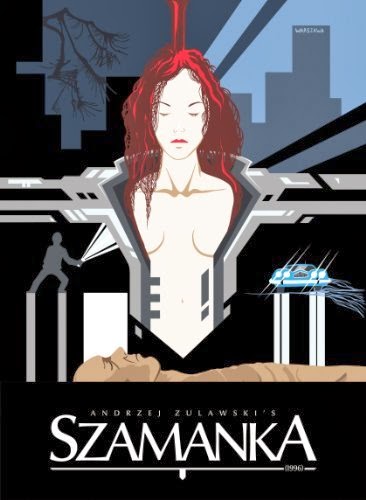
Szamanka (1996)

In March 2012 the Brooklyn Academy of Music ran a complete retrospective showcasing  the films of Andrzej Zulawski under the banner of “Hysterical Excess”, something which the man himself took issue with. When asked about the title in an interview Zulawski’s response was “This is the exact reason I am here in Warsaw and not in New York. I hated it so profoundly, it sounded so base… On the other hand, I understand that these nice good people want to have something catchy. But I’m totally, totally aghast. I’m against this, and this is the reason I never came.” For the longest time “Hysterical” has been the go to term for many when attempting to describe Zulawski’s work and while its understandable to a point, perhaps “emotional” would be a more appropriate term, as the majority, if not all of Zulawski’s films are intensely emotional experiences, films such as Diabel (1972), Possession (1981) and La Femme Publique (1984) amongst many others feature characters experiencing basically every conceivable human emotion possible, oftentimes several at once. “Hysteria” is simply one out of many on display. 1996’s Szamanka, to date Zulawski’s second to last film and his 4th overall Polish film is a prime example of Zulawski’s emotional filmmaking. Almost instantly notorious in Poland upon it’s release, Szamanka is certainly a stand out film and although some purists may disagree, one of Zulawski’s best films.

Immediately after his priest brother hastily vacates his apartment, Michal (Boguslaw Linda), an anthropology professor is approached by an overly enthusiastic engineering student known only as “The Italian” (Iwona Petry) about renting the place. While showing her around the apartment Michal rapes her, although it eventually becomes consensual and the two begin a fierce sexual relationship. Michal and his anthropology team have just unearthed the preserved body of a 2,000 year old shaman, and Michal is determined to discover the cause of the shaman’s death. The deeper Michal goes into his research, the more and more intense his relationship with The Italian becomes and his world quickly becomes dominated by two obsessions, the mystery of the shaman and the equally mysterious Italian.

It would be very difficult to confuse Szamanka (“She-Shaman”) with the work of any other filmmaker as Szamanka is very much a 100% Zulawski experience, so much so it has led some to label the film as a self parody complete with manic performances and themes dealing with the spiritual and sexual, oftentimes combining the two. Like the majority of Zulawki’s films Szamanka refuses to be pigeonholed into one genre or another, running the gamut from demented psychosexual drama to surreal esoteric elements, so to speak, later on in the film that could be described at best as transgressive horror, and there are also moments in the film which are quite comedic in their absurdity. To those unfamiliar with Zulawski’s work the film will probably come across as incoherent madness but as any Zulawski fan will attest to, there is something much more going on, something profound, which goes back to Zulawski being an emotional filmmaker. Despite the odd behavior of his characters, Zulawski has an odd way of never alienating the audiences (the select audience Zulawski’s films “work” for that is) in fact the opposite is true which is especially the case with Szamanka. The further forward the film moves and the more bizarre Michal and The Italian become the more engaging they become. Of course along with the relationship between Michal and The Italian is relationship between Michal and the dead shaman and the way Zulawski effectively blends the two is brilliant especially as the film moves further into hallucinogenic territory.
Andrzej Korzynski's amazing soundtrack which is included in
Mondo Vision's box set of the film.

Even with the long list of previous eccentric Zulawski heroines that came before her, Iwona Petry in the role of The Italian is still one of the most unhinged and perplexing characters in Zulawski’s filmography. The most obvious comparison would be Isabelle Adjani’s Anna from Possession but the case could be made that The Italian also shares some similarities with Valerie Kaprisky’s Ethel from La Femme Publique. Petry was the perfect choice to play The Italian particularly because she was an unknown at the time, something which only fueled the already enigmatic Italian so wonderfully written by the films screenwriter Manuela Gretkowska. The Italian also happens to be one of the most sympathetic characters in the Zulawski canon and as the relationship between her and Michal progresses, her way of conducting herself actually becomes justified in a strange way. Of course the performance of  Boguslaw Linda cannot be understated and he is equally brilliant in the role of Michal but ultimately this is really Petry’s show. Perhaps Michal and The Italian’s relationship is best expressed not by the actors themselves but by the films two reoccurring musical motives courtesy of longtime Zulawski collaborator Andrzej Korzynski, pounding, tribal-esque drums mixed with electric guitars for the sex scenes and tender strings reserved for the scenes involving the dead shaman. Its important to note that originally Zulawski had intended to use the strings for the sex scenes and the drums for the shaman until deciding it would have been inappropriate and the results speak for themselves.

When Szamanka was released in Poland the response was less than welcoming especially from the Catholic church. During the interview on Mondo Vision’s must have DVD release of the film Zulawski recalls a humorous instance of a priest in one Polish village standing outside a theatre and trying to physically stop people from seeing the film and in certain parts of the country the film could only be shown during late night screenings. The film also faced some hostile criticism for its treatment of anthropology, something which is taken very seriously in Poland. Then of course there was the controversy surrounding lead actress Iwona Petry with rumors quickly spreading about Zulawski’s alleged mistreatment of her on the set, of her needing to be committed to an asylum, things of that nature. According to Petry herself, the majority of those rumors were just that, tabloid fodder, although she didn’t deny that the shoot was an intense experience. After Szamanka she basically did a disappearing act, traveling abroad and going to school until making a brief public re-appearance in 2004 with the publication of Gabinet żółcieni, a book of short stories which Zulawski actually helped out with. Szamanka remains her only appearance in a feature film which is a shame as its an extraordinary performance in an extraordinary, absolutely essential Zulawski film featuring all the trademarks from one of cinema’s most original and confrontational auteurs.


Monday, December 2, 2013

The Paradine Case (1947)

On one hand its kind of incredible to think that one of the biggest partnerships in cinematic history, that of producer David O. Selznick and director Alfred Hitchcock only produced three films, Rebecca (1940), Spellbound (1945) and 1947’s The Paradine Case. Notorious (1946) began life as a Selznick production but Selznick later lost interest and eventually sold the film to RKO Pictures but in typical Selznick fashion took a percentage of the profits and still tried to change the script to his liking. On the other hand, knowing the history between Hitchcock and Selznick its easy to see why they only made three films together. The relationship between Hitchcock and Selznick was quite a complicated one. Many experts have said over the years that while Hitchcock respected Selznick, he found his constant meddling and interference, something which Selznick was infamous for, insufferable and the production of The Paradine Case which would become the very last Hitchcock film produced by Selznick was no different with Selznick re-writing the entire script, the first draft of which was written by Hitchcock himself along with his wife Alma Reville. Considering the legacy of Hitchcock and Selznick, its rather puzzling that the last film to come out of the seven year contract between the two is one of Hitchcock’s lesser known, almost forgotten films and its really a shame as The Paradine Case is a real hidden gem.

Maddalena Anna Paradine (Alida Valli, billed here simply as “Valli”), the wealthy foreign wife of a retired Colonel is arrested on chargers of poisoning her elderly blind husband to death. Anthony Keane (Gregory Peck), a highly successful barrister is hired as her defense attorney, although the case becomes complicated rather quickly as the happily married Keane begins to fall hopelessly in love with Mrs. Paradine, endangering not only his professional reputation but his marriage of 11 years to his wife Gay (Ann Todd) and as the case moves closer to trial Keane’s professional attitude towards the case gradually becomes overshadowed by his personal feelings for Mrs. Paradine.

Unquestionably the most low key of not just Hitchcock’s Selznick produced films but all the films of his Hollywood era, The Paradine Case might appear somewhat atypical at first to more casual fans who may only be aware of the bigger names in Hitchcock’s filmography but several of Hitchcock’s trademarks are quickly revealed. The go to term to describe the film seems to be “courtroom drama”, not an inaccurate classification yet to label the film simply as a courtroom drama would be selling the film short. The majority of the film plays out like a study of a key Hitchcock motif, obsession. While Hitchcock might not take the idea into territories he would in a film like Vertigo (1958), The Paradine Case is nonetheless one of Hitchcock’s darkest films on that front the way it presents Keane’s growing infatuation with Mrs. Paradine to the point where both his professional and personal reputations are put on the line. Of course the mystery surrounding the murder of Mrs. Paradine’s husband and whether or not she is guilty is always hovering over the films psychological proceedings always balancing each other out nicely and the two finally come to a head when the film finally does enter the courtroom. What Hitchcock does so brilliantly during the courtroom scenes is allow the mystery angle to come to the forefront which in turn allows Keane’s fixation on Mrs. Paradine to boil over and the results are unbearably tense, edge of the seat material that only Hitchcock could have crafted.

Detractors of the film claim that Gregory Peck was miscast, that Peck was just too likable and that because of that the film doesn’t work as it isn’t at all plausible that the successful lawyer with a loving wife would fall for a woman such as Mrs. Paradine. Really an odd criticism as its exactly why the film does work! Keane IS a likable man and Hitchcock was wise to include scenes of him and Ann Todd early on as the seemingly perfect happy go lucky married couple as they make Kean‘s attraction to Mrs. Paradine more impactful. There are times when Peck’s performance is downright uncomfortable, namely the sequence of Keane entering Mrs. Paradine’s bedroom while exploring the Paradine’s country home seeking out evidence for the case. Alida Valli, perhaps best known to genre fans for her role as the imposing dance instructor Mrs. Tanner in Dario Argento’s Suspiria (1977) was a wise choice for the role of Mrs. Paradine. Valli possesses a presence that is striking as it is mysteriously alluring, made even more so the way Hitchcock photographs her. There is an undeniable femme fatale quality to her, yet there is also a certain ambiguity which was crucial to the part. Stealing the show however is Louis Jordan who enters in the second half of the film and who’s character adds an whole new dynamic to the story. Jordan absolutely owns the courtroom scenes, his back and forth’s with Peck make those moments in the film all the more intense.

The Paradine Case also sticks out on account of being one of Hitchcock’s most expensive films for a variety of reasons. The biggest being the sets for the trial sequences had to be custom built in order to not only accurately replicate the look of an English courtroom but also so Hitchcock could shoot a certain way. From a technical standpoint the scenes in the courtroom could be seen as somewhat of a precursor to Hitchcock’s follow up to The Paradine Case, Rope (1948) due to the constant long takes and Hitchcock would also later masterfully create highly dramatic suspense via a courtroom in I Confess (1953), another one of Hitchcock’s most underappreciated films. Naturally Selznick’s trademark interference didn’t do the films budget any favors with his insistence on multiple re-shoots. Another interesting and rather humorous tidbit about the film was Selznick’s inability to settle on a title for the film having several titles, many absurd in mind before finally settling on “The Paradine Case” (the same name of the book on which the film is based by the way) literally at the 11th hour right before the film was sent out to its world premier. The Paradine Case might not have the same status as Rebecca or Spellbound, the previous two films Hitchcock/Selznick films, but it is ultimately an important film and is a film that’s more than worthy of a rediscovery.