Monday, July 6, 2020

No Reason (2010)


One of the more more interesting discussions to be had regarding film violence is the individualistic way in which certain filmmakers approach bloodletting. For instance, the violent setpieces in the films of Dario Argento have long been recognized for their baroque, painterly quality, so immaculately composed that even the more horrific scenarios take on a air of beauty. Contrast that with Lucio Fulci, who once opined that “Violence is Italian art.” Fulci's violence could be brutally realistic in a film like The New York Ripper (1982) but the free-form narrative of a film like The Beyond (1981) took the gore into an otherworldly surreal realm. Paul Verhoeven has been known to use over-the-top violence in a satirical manner in films like RoboCop (1987) and Starship Troopers (1997) whereas Takashi Miike does the same in a film like Ichi the Killer (2001) but takes the violence into unnerving territory in Audition (1999) and Imprint (2006). As one of the forefathers of German splatter, extreme gore became Olaf Ittenbach's calling card from his very first film Black Past (1989). Ittenbach's approach to gore is often so gratuitous, not to mention innovative, that the violence in his films can often seem surrealistic in it's excess. Combining his trademark gore with an esoteric plot, 2010's No Reason stands as one of Ittenbach's most ambitious and potent films, and a work bound to alienate even seasoned splatter defenders.

In the process of moving out of their apartment building, the happily married Jennifer (Irene Holzfurtner) and Sebastian begin their day like any other. After Sebastian leaves for work, Jennifer drops her son Nico off at her elderly neighbors before doing some shopping, though when she returns her day takes a turn for the worse when the neighbor, along with her son, has inexplicably gone missing. Worse yet, Jennifer is sent photos of her husband and another woman in their building in bed. In an attempt to calm down and clear her mind, Jennifer slips into the bath and falls asleep, only to wake up covered in blood and surrounded by dismembered body parts, greeted by an imposing figure in a tentacled mask who proceeds to lead Jennifer through various levels of a hellish netherworld.

No Reason is and isn't a typical Ittenbach film. While the gore effects are, as always, up to Ittenbach's high standard and would be pretty difficult to mistake for the work of anyone else, it's the story that makes the film so peculiar. Ittenbach was no stranger to off-center storytelling, but even still No Reason is a markedly different, transcendental kind of story for Ittenbach. Over all, the biggest thing that separates No Reason from the Ittenbach films that came before it would be tone. Even Ittenbach's darkest minded films feature bits of his humor tossed about the film, but save for one very brief moment early on, No Reason is an exceptionally grim affair. Setting aside the violence for a moment, the film is smothered in a thick, morose atmosphere from the very beginning. Even the early scenes of Jennifer as a happily married family woman have a slight air of unease to them given the horror Jennifer is about to endure and the more Jennifer's ordeal goes on and the more Ittenbach reveals about her character, the film darkens in tone even more. Admittedly the true nature of what Jennifer is put through isn't entirely surprising, but it's the ordeal itself at the center of the film, Ittenabach's method of depicting it making the film all the more curious. Having each “level” of the hellish netherworld be based upon one color, Ittenbach baths the screen in red, green and blue, the “green level” being the films highlight, a Hellraiser-esque S&M nightclub.

As stylish and colorful as the film is and as much as Ittenbach astonishes in the gore department, presenting a range of atrocities and even some grotesque creatures, the weight of the film rests on the shoulders of Irene Holzfurtner who carries the heaviness of the material, going the extra mile emotionally and physically. Throughout the course of her torments, Holzfurtner displays more or less every emotion a performer can muster but for 99.9% of the film Holzfurtner is completely nude yet given the context of everything is never eroticized. It's also worth noting that both Takashi Ishii's A Night in Nude: Salvation (2010) and David Blyth's Wound (2010) were also released the same year as No Reason and both feature extremely harrowing performances, with their leading ladies, Hiroko Sato and Kate O'Rourke respectively, both spiraling into a psychological abyss. Holzfurtner's turn in No Reason is easily on par with both, though obviously the films are wildly different from each other save for their unflinching transgressions and all three having been made by filmmakers who have carved out a niche for themselves by dividing audiences. With No Reason, Ittenbach is at his most divisive. The gore will no-doubt please the extreme horror crowed who will possibly be bored with the narrative concepts which might get the film some appreciation from splatter detractors that will be put off by the violence. Quite the accomplishment.


Monday, June 22, 2020

Dard Divorce (2007)


While provocation in film is always welcome, especially in these times of moral posturing and virtue signaling, making an “extreme” film can sometimes be a tightrope to walk in that the idea of being “shocking” for the sake of it can wear thin pretty fast. Looking back however at the proliferation of films that got branded with the “extreme” tag that sprung up in the late 90's and early to mid-2000's, a good number of them stand the test of time, no doubt on account of being made by filmmakers with more on there mind that mere shock value. Japan was particularly adept in this field, with Takashi Miike taking on-screen gore and twisted sexuality to new levels in Ichi the Killer (2001) and Visitor Q (2001) and Takashi Ishii pushing Japanese censorship to its limits with Flower and Snake (2004). South Korea's Kim Ki-duk also had audiences gasping thanks to films like The Isle (2000) and Bad Guy (2001). There was also of course the New French Extremity, the pinnacle being Gaspar Noe's Irreversible (2002) which turned the rape-revenge formula on its head by telling the story backwards. Being one of the forefathers of German splatter, Olaf Ittenbach was an extreme filmmaker from the beginning so it's hardly a shock that 2007's Dard Divorce, an exceptionally nasty piece of business, would out-due the rest of the extreme horror competition at the time.

In the midst of a nasty separation from her husband Tim, Nathalie Stein (Martina Ittenbach) is shocked when Tim appears on her front porch appearing to be gravely injured, only to die right in front of her. When Nathalie returns after calling the police however, Tim's body is nowhere to be found. Soon after Nathalie begins to learn some hidden truths about her husband and his involvement with several shady individuals when she is visited by two strangers each telling their own version of what really happened with Tim and a substantial amount of cash. With both believing Nathalie to be hiding information from them regarding Tim, Nathalie finds herself fighting for survival with both attempting to retrieve answers from her utilizing increasingly excruciating methods.

Sadistic even by Ittenbach standards, Dard Divorce (“Dard” being a Persian word for “pain” which is made a plot-point) has the misfortune of being branded with the lamentable label “torture porn” by dismissive reviewers, a massive short-selling of the film. While it's true that Nathalie's tormentors do utilize torturous tactics, the actual scenes of torture aren't what hold the film together. The core of the film is the mystery surrounding Tim's disappearance, if he's actually dead or not and what exactly did he do to cause Nathalie to endure all she does throughout the film. Making things more interesting is the Rashomon (1950) style in which the story is told, with each of Nathalie's torturers telling their own version of the story, each of course being completely different. Although Tim and Nathalie's actual divorce never becomes that big of a narrative concern, Ittenbach nevertheless finds time to address it, even making Nathalie a bit of an alcoholic. Having children getting mixed up in both the divorce as well as the ensuing violence also add a bit more drama to the divorce angle, making Nathlie's struggle all the more harrowing with Martina Ittenbach really being put through hell. Dard Divorce may also have the distinction of being Ittenbach's most viscerally violent film with Ittenbach crafting some of his most grotesque moments including an over-the-top kitchen massacre and a jaw-droppingly innovative death scene on par with the decent into Hell in The Burning Moon (1992) and the SWAT team assault in Garden of Love (2003).

Unfortunately, the film does suffer from a glaring technical flaw late in the film when the details of the central mystery are revealed, the music becomes so loud 99.9% of the dialogue is nearly unintelligible. It doesn't seem to be an issue affecting select copies of the film either as nearly every review available of the film makes note of it. Not that it leaves things open ended, the montage played during the scene makes everything perfectly clear, but to say its distracting would be an understatement. It doesn't seem like Ittenbach has addressed the issue anywhere either, though again the film was very much a bare-bones type of production with Ittenbach shooting a good chuck of the film in his own home in Germany but also later traveling to the US to shoot additional footage, explaining the sometimes awkward clashing of German and American accents. This back-to-basics type of working does give the film a much more grittier feel than some of Ittenbach's previous works like Beyond the Limits (2003) and the previously mentioned Garden of Love, making the film feel more in line with Ittenbach's earlier works like Black Past (1989) and The Burning Moon. Dard Divorce is certainly an acquired taste in an already niche subgenre, but when taking into consideration the horror zeitgeist of the time, it's a prime example of a master demonstrating how to really get extreme.


Monday, June 8, 2020

Chain Reaction (2006)


AKA House of Blood, House of Horrors and Zombie Onslaught

While most directors would be happy to carve out a niche for themselves in various styles or genres, it can also be somewhat of a curse with only one aspect of their directorial skills being highlighted while others are given a cursory notice at best and at worst, ignored completely. For instance, filmmakers like Ruggero Deotado and Umberto Lenzi only being recognized for their cannibal films while their other genre work tends to get sidestepped, or Walerian Borowczyk remembered only for erotica while ignoring his sense of humor and astonishing visual sense. German splatter auteur Olaf Ittenbach also belongs to this group of directors. As one of the forefathers of German splatter, it was inevitable that Ittenbach's claim to fame was going to be his special effects work and understandably so. Ittenbach's gore effects are on another level of quality than most, and his films certainly go into extreme territory so it's a reputation he's earned. One particular quality of Ittenbach's work that tends to get ignored is that, along with his always innovative approach to violence, Ittenbach can always be relied upon for some fairly idiosyncratic storytelling with films like Premutos: The Fallen Angel (1997), Garden of Love (2003) and Dard Divorce (2007) all taking their stories into interesting directions. For Chain Reaction, Ittenbach takes a fairly simple horror concept and steers it into some frankly esoteric and exceptionally bloody realms.

After colliding with a bus transferring prisoners, Dr. Douglas Madsen is taken hostage by the surviving prisoners, demanding that he lead them to the Canadian border and treat the life-threatening injuries of Spence, the brother of Arthur, the de-facto leader of the convicts. While trekking through thick forest, the group happen upon an isolated cabin which they invade for shelter, discovering a strange, devoutly religious familial unit speaking in old-tyme language. After declaring the cabin theirs and isolating the family, the group soon discovers the true, blood-thirsty and demonic nature of their hosts.    

Chain Reaction is perhaps the quintessential film when making the case for Ittenbach being far from a one-note filmmaker. Granted, the concept of escaped convicts discovering a cabin inhabited by demons isn't the most novel of set-ups, and in the hands of nearly any other director would have probably been approached in a pretty straightforward fashion. Ittenbach however takes an entirely different approach right from the very beginning, opening with a damn near Roegian montage that makes more sense as Ittenbach unfolds this elliptical and weirdly emotional narrative that seemingly takes place in a parallel world where deja-vu is a reoccurring, pre-determined fate. Having the cabin family speak in bizarre old-tyme tongue greatly adds to this slightly alien feel, and Ittenbach conjures up dense atmosphere around the cabin and its surroundings. While Ittenbach could have very well made a good movie simply utilizing the basic escaped convicts vs. demons story, he does something fascinating in the middle of the film by repeating the scenario a second time with a different set of cons and making Dr. Madsen a prisoner. Because of Madsen, the second go around twists some other things as well, adding to an already loaded story a connection of sorts, perhaps past-life, between Madsen and the most “human” of the demonic family, Alice, played by Ittenbach's then wife Martina. Needless to say, the films big gore centerpieces are flawless with Ittenbach once again inventing highly unique ways of dismembering the human form and actually builds tension between the major bloodletting sequences.


The film is comprised of a host of Ittenbach regulars with Christopher Kriesa making his third is appearance for Ittenbach following Legion of the Dead (2001) and Beyond the Limits (2003). Also making their third Ittenbach film are James Matthews-Pyecka and Daryl Jackson, both also in Beyond the Limits and Garden of Love and of course Martina Ittenbach would later feature in Dard Divorce and Legend of Hell (2012) amongst others. Unfortunately, like so many of Ittenbach's films, Chain Reaction has suffered on the home video front thanks to cut releases with its most easily variable North American DVD release under the “House of Blood” title being cut, begging the question of why even bother release an Ittenbach film in the first place if all the gore effects weren't intact? Much like Garden of Love, the film has also had the misfortune of being released under the wildly inappropriate alternate of “Zombie Onslaught” complete with equally misrepresentative cover art. There is however a very good Polish DVD containing the complete version of the film and is pretty easy to track down making it a good buying option and it is a more than worthy purchase. Chain Reaction is first and foremost a splatter film, but the unorthodox storytelling and other various oddities Ittenbach mixes in make the film one of Ittenbach's more curious and one of the more interesting films in contemporary horror.

Monday, May 25, 2020

Garden of Love (2003)


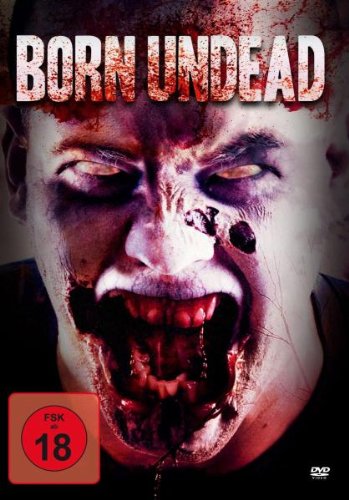
AKA The Haunting of Rebecca Verlaine and Born Undead 

Although he'll likely never be given credit for it by detractors who see him as nothing more than a schlocky goremiester, Olaf Ittenbach is far from a one-note filmmaker. As one of the forefathers of German splatter, of course Ittenbach is going to be best known for his incredible special effects work and the man himself has even stated in interviews that his main purpose with his films is to entertain. Nevertheless, it's clear to anyone actually paying attention to his films that Ittenbach has more on his mind than just gore. One key thread that runs throughout a good chunk of Ittenbach's filmography is the concept of family, and especially families in conflict, going all the way back to Ittenbach's first feature Black Past (1989) where Ittenbach himself played an angsty teenager constantly at odds with his father and sisters. The Burning Moon (1992) also saw Ittenbach play the role of a mad at the world, junkie teen who comes to physical blows with his family. Ittenbach later took the family concept into grotesque comedic territory with Family Saga (2006), or Familienradgeber and its sequel Familienradgeber 2 (2009). Familial ties also play significant roles in the narratives of Chain Reaction (2006), Dard Divorce (2007) and No Reason (2010). One of Ittenbach's best films, 2003's Garden of Love saw Ittenbach put a supernatural spin on the theme along with a few other surprises.

In 1990, the inhabitants of the Verlaine compound, a commune of hippies led by rock star Gabriel Verlaine were brutally murdered by a masked madman, the lone survivor being Gabriel's young daughter Rebecca who slipped into a coma and was subsequently raised by her aunt and uncle with no memory of the murders. Years later, Rebecca (Natacza Boon), a well-adjusted student begins receiving strange messages from horribly disfigured ghostly figures who reveal themselves to be her father and the victims of the massacre, urging Rebecca to seek out those responsible for the killings, luring victims to the vengeful spirits at the compound, uncovering the truth about her past and the murders in the process.

Despite the rather bland re-titling the film “The Haunting of Rebecca Verlaine” for its DVD release, Garden of Love, named for a Gabriel Verlaine song in the film, is far from being a bland haunting film. The film may be a ghost story first and foremost, but in a wonderful display of cross-subgenre pollination, Ittenbach also delivers a revenge film from the vantage point of the ghosts, but what's at the heart of the film is the character study of Rebecca. Easily sympathetic, Ittenbach puts in extra effort to develop her character throughout, making the various narrative twists all the more potent. The twists are quite nasty and giallo-esque, which take the film into the realms of a “drive-the-woman-crazy” type of film such as Umberto Lenzi's Orgasmo/Paranoia (1969). And the film is, of course, a splatter film, through many will be surprised by the fact that the film really only contains three major gore set-pieces, the main highlight being the slaughter of an entire SWAT team by the hands of the ghosts, one of the most memorable scenes in all of Ittenbach's oeuvre. The effects work is, as always with Ittenbach, outstanding and innovative. The ghosts themselves look fantastic and Cenobite-esque with Ittenbach channeling his love of Hellraiser (1987) during their appearances which are all incredibly stylish and give moments of the film a thick atmosphere, Ittenbach also managing to avoid cheap jump-scare tactics. Ittenbach's warped sense of humor is also featured in a hilarious infomerical parody featuring the ghost of Rebecca's father.

All of the emotional weight of the film rests on the shoulders of lead actress Natacza Boon who, along with having an interesting Shelley Duvall-esque look to her, is also a more than capable actress who's performance really elevates the material. Garden of Love was Boon's second film with Ittenbach, having previously featured in the second segment of Ittenbach's anthology Beyond the Limits (2003) where her character also gave the story a bit of heart. While being interviewed for the Beyond the Limits DVD, Ittenbach praised Boon saying “I think with Natacza I had the most fun on the set, you know. She's totally funny, she's totally crazy and she's absolutely cool.” Strange since they had such a strong rapport that they only did two films together. Unlike so many Ittenbach titles, who still face draconian censorship for their home video releases, particularly in Ittenbach's homeland of Germany, Garden of Love also his the distinction of having an easily available uncut DVD release, albeit under the anonymous sounding re-title “The Haunting of Rebecca Verlaine”. The film was also released under the wildly misleading title of “Born Undead” with equally misleading cover art. Titles aside, Garden of Love is a gem of a post-2000 horror movie with Ittenbach not only finding new and clever ways to splash the screen with blood, but crafting an intriguing storyline to go along with his trademark splatter effects.


Monday, May 11, 2020

Beyond the Limits (2003)


Anthology films have long been a way for directors to have fun within a shorter format and also serve as a nice way for younger filmmakers to further hone their craft. Always fertile in the horror genre, the anthology format has become especially popular in recent years with the stories contained within the films often centering around a common thread. While the multi-director anthology films always present interesting concepts, what's just as interesting and can sometimes be even moreso is how a single director approaches an anthology film. Some of the obvious examples include Mario Bava's Black Sabbath (1963), Freddie Francis' Tales from the Crypt (1972), Dan Curtis' Trilogy of Terror (1975) and of course George Romero's Creepshow (1982). Walerian Borowczyk also proved himself to be adept at anthologies firstly with Immoral Tales (1974) and later with Immoral Women (1979). Borowczyk would also feature in another erotic anthology, Private Collection (1979) alongside Shūji Terayama and Just Jaeckin. Another director who proved to handle the anthology concept quite well is German splatter heavyweight Olaf Ittenbach, who's second feature, the infamous shot-on-video anthology The Burning Moon (1992) became an immediate underground favorite and solidified Ittenbach's reputation among fans of extreme gore effects. Ittenbach would return to the format in 2003 with Beyond the Limits, one of the most ambitious works in the realm of German splatter and certainty one of the bloodiest anthology offerings around.

Vivian, a young journalist seeks out Frederick, the caretaker of a centuries old cemetery for an interview. Frederick agrees and begins to tell her two stories about his “customers”, as he reefers to them as, the main thread tying both tales together being an ancient relic known as the “eternal heart”, a human heart said to grant immortality to whomever possesses it. The first, a contemporary story involving double-crossing gangsters, a coke deal gone bad and a dinner party interrupted by two sadistic hitmen while the second story goes back to the middle ages and the origin of the heart, centering on David Deming, a renegade inquisitor obsessed with obtaining the heart and James Flynn, a true believer desperate to stop Deming.

Beyond the Limits couldn't have been a more appropriate title. As is often the case with Ittenbach, the film could be labeled as “extreme”, though not just in the violence and gore departments, which are pretty extraordinary. Virtually everything in the film is heightened, from the exaggerated performances, the gangster story becoming downright histrionic at times, the acidic dialogue spouted in both segments and flashy camerawork, with Ittenbach really flexing his directorial muscles throughout the film. Yet that's precisely how a film such as Beyond the Limits needs to operate. As an actual anthology film, the film works thanks not only to the concept of the “eternal heart”, which is a unique idea in and of itself, but the clever twist Ittenbach tosses in at the end tying both stories together with the interview wrap-around. Both stories would have worked equally with or without the wrap-around segments and both have more to offer than just focusing on the heart. The gangster segment in particular has a pretty involving side plot involving revenge and the modern setting gives the violence an especially vicious kick. The medieval story plays out like a more classical tale and like the first also features several interesting asides, including a love story that amazingly works within the context of the segment and doesn't feel out of place. The segment also features a bit of sword-fighting action and Ittenbach sneaks in some of his morbid humor amidst the excessive bloodshed splashed throughout the segment, Ittenbach's effects work astonishing as always.

Beyond the Limits was co-written by Ittenbach and Thomas Reitmair, who was Ittenbach's right hand man in a number of departments for many years going all the way back to Ittenbach's debut feature Black Past (1989). It was the second screenplay Reitmair collaborated with Ittenbach on following Riverplay (2001) and the two would also co-write Garden of Love (2003) and Chain Reaction (2006). Reitmair has also appeared on screen in several of Ittenbach's films, most notably in Beyond the Limits as one if the hitmen in the first story but Reitmair also features in Premutos: The Fallen Angel (1997), Riverplay, Garden of Love, Chain Reaction, Dard Divorce (2007), No Reason (2010) and Legend of Hell (2012). Reitmair has also written music for Black Past, Premutos, Riverplay, Garden of Love and Chain Reaction as well as serving as Ittenbach's assistant director on Riverplay, Legion of the Dead (2001), Beyond the Limits, Garden of Love and Chain Reaction. Like so many of Ittenbach's films, Beyond the Limits has also fallen victim to draconian censorship laws, resulting many cut DVD releases. By far the best release is the steelbook, which, along with containing the complete film also features a hefty bunch of behind-the-scenes footage showing that even when working with a slightly larger budget and bigger crew, Ittenbach's approach is always hands-on, making Beyond the Limits one of the more quality horror films from the 2000's.


Monday, April 27, 2020

Black Past (1989)


Although unfortunately some of the fanfare tends to come from the cult of irony, the more light shone on shot-on-video movies the better as such works represent an important part in evolution of filmmaking. It's been documented countless times, but the fact remains that not only did the video revolution make it easier for everyone to watch films in their own homes, but the accessibility of video cameras made it easier to make their own films. Of course, given that the majority of SOV movies were amateur productions the quality of the majority of SOV movies can be rather shoddy, yet despite the quality, the one trait all SOV films had was sincerity. That combined with the amateur effect made the movies feel all the more personal and gave the SOV aesthetic an odd mystique. While a good chunk of the biggest SOV titles like Boardinghouse (1982), Sledgehammer (1983), Black Devil Doll from Hell (1984) and Woodchipper Massacre (1988) were American productions, Europe had its own movement, the leader of which was Germany's Olaf Ittenbach. Ittenbach quickly gained notoriety among underground horror fans due to the extreme gore quotient of his films, chief among them the infamous The Burning Moon (1992) and later Premutos: The Fallen Angel (1997) but it was Ittenbach's first feature Black Past that put his name on the map, a crucial title for both splatter horror and SOV films.

After moving into a new house with his father and two nagging sisters, Thommy (Ittenbach), an aimless and angsty teenager discovers a mirror chained up in a box in the attic that belonged to the previous owner of the house who went on a murderous rampage. Thommy hangs the mirror in his room only to discover the sinister forces it houses when his girlfriend Petra walks into oncoming traffic after being put into a daze by the mirror. After reading the diary he found with the mirror, Thommy finds himself under the mirror's spell, transforming him into deadly demonic entity.

A labor of love in every sense of the term with Ittenbach writing, directing, acting, co-producing and doing the effects, Black Past stands head and shoulders above most shot-on-video features in every department. What's more, Ittenbach's previous film work consisted of shorts which he freely admits were excuses for showcases his effects work and like most SOV flicks, Black Past was shot mostly on weekends. Although the cursed house set-up is a familiar one, Ittenbach keeps things fresh and even takes the film into territories that most SOV features would never attempt to go. There is a sincere attempt at drama throughout the entire film revolving around Thommy and his constant feuding with his father and sisters. Despite Thommy's deadbeat nature, Ittenbach himself has a certain charm about him and his family's constant harping on him about everything does make his anger seem a bit more justified. Even the moments that are an obvious attempt at padding out the run time, one of the most common occurrences during SOV movies, like scenes of Thommy wandering aimlessly in stores have an endearing factor to them because of Ittenbach's emphasis on giving the film a semblance of emotion. Obviously due to the format the film does run into some of the technical issues inherent in all video movies, but again Ittenbach manages to minimize them and thanks to his ingenuity even gives moments of the film as genuine sense of style and atmosphere, particularly during the third act when the film becomes a massive bloodbath.

Being an Ittenbach film, the biggest selling point is of course going to be the gore with all the effects created by Ittenbach himself. What may surprise many given Ittenbach's reputation is how he takes his time with it. There are splashes of violence in the opening of the film and sprinkled throughout in the form of hallucination and dream scenes but Ittenbach saves the big showcase for the films previously mentioned third act which consists of one big gore set piece after another. Not only is the gore plentiful (and rather mean spirited with one particularly savage bit involving one of Thommy's sisters) but more importantly, it's innovative with Ittenbach coming up with some pretty astonishing and original ways of filling the screen with as much blood as possible. It's also crucial to point out that the effects were 100% practical which, given the resources Ittenbach was working with, make them all the more admirable. Perhaps the most impressive would be Thommy's transformation into his fully demonic form, though there is a showstopping hallucination/dream that Ittenbach would improve upon with the infamous Hell segment in his follow-up film The Burning Moon, his most well known work. Ittenbach's effects skills would eventually find him work on other films, but it all began with Black Past, a remarkably assured film for a homegrown debut and really an important entry in the German horror canon.


Monday, April 13, 2020

Fresh Meat: A Ghost Story (1995)


The 90's were very much a transitional period for film, American film in particular. By and large, the 90's were the last decade of diversity in terms of budget. While the decade had its share of massive blockbusters, those types of films didn't have the stranglehold they have over the modern film industry, leaving room for middle budget films to breath along with the plethora of films to come out of the 90's indie boom. The adult film industry was also going through something similar throughout the 90's. Although plotless gonzo movies had gobbled up the majority of the market since the video revolution in the 80's, there were still a select few left in the adult world at the dawn of the 90's still intent on producing something out of the ordinary, one of which was John Leslie. The actor turned director had been on a hot streak since 1988, churning out some of the best adult films in early 90's, culminating in his jump from VCA to Evil Angel with his masterpiece Dog Walker (1994). Leslie followed up Dog Walker with a transitional film of his own, Fresh Meat: A Ghost Story, his most bizarre and difficult work and a film that marked the end of an era of consistently fascinating and original narrative based features for Leslie while also signifying the path he would take until his passing in 2010.

Unlike Dog Walker which began on a somewhat traditional note before going into more stranger territory, with Fresh Meat Leslie tosses anything resembling traditional narrative out the window the moment the opening credits end. Leslie does the film somewhat of a narrative set-up around Danny (Joey Silvera) and his wife Julia (Krysti Lynn) along with their “pet” human moving into their new house, where the realtor informs them of a former resident of the house known as “The Butcher” who killed his wife before hanging himself in a meat locker. Anything that happens after is left up to interpretation as the film plays out like a hardcore predecessor to David Lynch's Inland Empire (2006) with Leslie directing Silvera, brilliantly perplexed from beginning to end, into one random scenario and sexual encounter after another, shifting perspectives and making any attempt at possible explanation the more futile as the film goes along. The film also finds itself at the end of the loose trilogy of Leslie films centered around the supernatural with the real estate angle returning from both Mad Love (1989) and Laying the Ghost (1991) while the sitcom style laugh track, lunatic sense of humor and various other eccentricities present in Laying the Ghost return in Fresh Meat, by far the most surreal and inaccessible of the three. Leslie takes the film into even more outlandish territory by breaking the fourth wall and showing the actual shooting of a scene featuring Jamie Gillis as a detective arresting actors who can't remember their lines.

The film also marked a stylistic transition for Leslie too. Leslie had shot the majority of his features on video, though managed to shoot three on 35mm, Chameleons (1992), Anything That Moves (1992) and Dog Walker. Despite the limitations of the medium, Leslie always managed to side-step the shortcomings and delivered some of the most stylish adult features of the time. Fresh Meat greatly differs in that it was lensed on a much more low quality of video giving the film an incredibly raw and personal feel very much like the gonzo movies Leslie would soon devote the rest of his career to and due to the opaque nature of the films plot, the sex scenes do tend to take up even more of an already extended amount of time, though much like Dog Walker, the drawn out nature and hallucinatory feel of the the scenarios begin to emit a hypnotic aura ensuring that anyone watching the film is put in the same dazed and confused headspace as Silvera. There are also several instances of black and white 8mm film spiced into the movie adding to the already rough tone. Leslie does inject many scenes with his unique sense of style though and the films costume design features a big focus on striking leather and PVC wear giving the film one foot in the fetish realm. Leslie does also push the boundaries in the bodily fluids department during an unforgettably odd sequence involving Silvera and his “pet”, a plot point played completely strait.

Either a creative choice or due to the economy of the adult industry of the time (and to this day by and large), following Fresh Meat: A Ghost Story Leslie's output consists of nearly all gonzo work. Ironically, Fresh Meat would go on to become a long running series, lasting a whopping 29 entries, although none are related to A Ghost Story. Leslie would also go on to create the first person Voyeur series which produced 36 entries. Other Leslie gonzo series include the cheekily titled Don't Make Me Beg, Ass Trap, Big Tit Crackers, Gobble the Goop and Crack Her Jack. Worlds removed from the likes of Leslie's earlier titles like The Catwoman (1988), Second Skin (1989), Chameleons and Anything That Movies. Interestingly, Leslie's career trajectory somewhat mirrors that of fellow adult legend José Bénazéraf who took a similar approach later in his career in the 80's. Leslie did direct the visually intriguing Drop Sex (1997) after A Ghost Story and managed to make one last narrative feature Brianna Love: Her Fine Sexy Self  (2007) (where he made a return in front of the camera as well) but Fresh Meat: A Ghost Story marked the end of era for Leslie and to a certain extent the adult industry as a whole with the film being one of the most original and surreal works to come out of the realm of adult film.